

LIVI POULTRY EQUIPMENT | KENYA AUTOMATIC LAYER FARM GUIDE
How to Equip a 20,000-Layer Chicken Farm in Kenya
Planning a commercial egg farm for 20,000 laying hens in Kenya? The right equipment can make daily farm operations more organized, but buying chicken cages alone is not enough. A successful project must coordinate the cage system, poultry house layout, automatic feeding, drinking, manure removal, egg collection, ventilation and supporting utilities. This guide explains how to select 20,000-layer chicken farm equipment in Kenya, calculate the number of H-type cage sets, prepare a practical poultry house layout and request a complete equipment quotation.QUICK ANSWER
To equip a 20,000-layer chicken farm in Kenya, start with a suitable poultry house layout and a 4-tier H-type layer cage system. LIVI recommends its popular 1200mm model, rated at 144 hens per set. At least 139 sets are needed mathematically; a preliminary four-row arrangement of 35 sets per row provides 140 sets and 20,160 installed positions. The complete equipment package should include automatic feeding, nipple drinking, manure belt removal, egg collection, ventilation, lighting, environmental controls, feed storage and reliable water and power supplies. Final dimensions and equipment quantities should follow the site-specific design.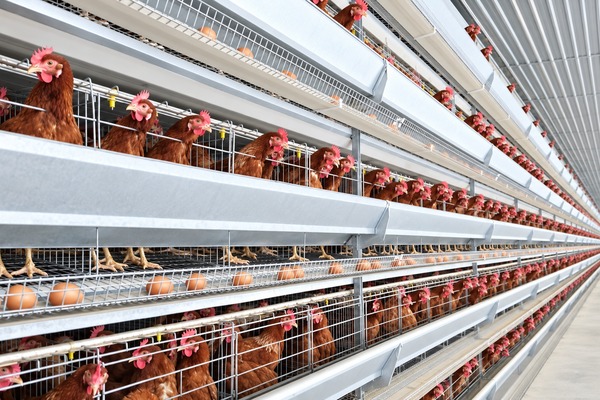
1. Start with the Right Poultry House Plan
Before ordering cages, confirm whether you already have a poultry house or intend to construct a new building. The equipment design should fit the available site rather than forcing a complete automatic cage system into a building with insufficient space. For a new 20,000-layer commercial egg farm, LIVI recommends evaluating a single poultry house with 4-tier H-type layer cages. The arrangement should leave suitable space for cage rows, service aisles, feeding machines, egg collection, manure discharge, ventilation and maintenance access. The final building length, width and height must come from the manufacturer’s actual cage and automation drawings. A reference 1200mm cage dimension is not the full installed length of a 144-bird cage set. If the poultry house has already been built, send the supplier its length, width, clear height, internal columns and entry positions. If construction has not started, provide the available land dimensions and obtain a preliminary equipment layout first.2. Choose A-Type or H-Type Layer Cages
Both A-type and H-type layer cages can be considered for commercial egg production, but they are usually chosen for different investment and operating requirements.| Selection Factor | A-Type Layer Cages | H-Type Layer Cages |
|---|---|---|
| Structure | A-frame design | Vertical multi-tier arrangement |
| Initial Investment | Often lower for basic configurations | Usually higher with integrated automation |
| Feeding | Manual, semi-automatic or selected automatic options | Compatible with automatic feeding equipment |
| Manure Removal | Scraper or other selected system | Manure belts beneath cage tiers |
| Egg Collection | Depends on selected equipment package | Compatible with automatic egg collection |
| 20,000-Layer Planning | Alternative for budget-focused projects | LIVI’s preferred fully automatic solution |
3. Why Choose LIVI’s 1200mm H-Type Cage Model?
LIVI’s preferred model for automatic layer projects is the 1200mm, 4-tier, 2-door H-type cage, with a rated capacity of 144 hens per set. It is one of LIVI’s popular cage configurations and can be integrated with automatic feeding, nipple drinking, manure removal and egg collection.| Specification | LIVI Reference Model |
|---|---|
| System | H-Type Layer Cage |
| Reference Model | 1200mm |
| Tiers | 4 |
| Door Configuration | 2-door reference model |
| Reference Cage Dimensions | 1200 × 625 × 480 mm |
| Rated Capacity | 144 birds per set |
| Recommended Automation | Feeding, drinking, manure removal and egg collection |
4. How Many H-Type Cage Sets Are Needed for 20,000 Layers?
With 144 bird positions per set, the mathematical minimum is: 20,000 ÷ 144 = 138.89, rounded up to 139 sets. For a preliminary four-row arrangement, one possible configuration uses 35 sets per row: 4 rows × 35 sets × 144 birds = 20,160 installed cage positions.| Planning Item | Reference Value |
|---|---|
| Target Capacity | 20,000 laying hens |
| Birds per Cage Set | 144 |
| Mathematical Minimum | 139 sets |
| Example Cage Rows | 4 |
| Sets per Row | 35 |
| Example Installed Sets | 140 |
| Example Installed Capacity | 20,160 positions |
20,000-Layer H-Type Cage House Layout
IMAGE POSITION: Insert a verified LIVI engineering drawing showing four H-type cage rows with 35 sets per row, service aisles, feeding machinery, manure discharge and egg collection positions.
Suggested filename: 20000-layer-h-type-poultry-house-layout-kenya.webp
5. Complete Automatic Poultry Equipment List for 20,000 Layers
A fully automatic layer farm requires more than a cage structure. Buyers should request an itemized equipment list and clarify which components are included, optional or supplied separately.| Equipment | Recommended Scope | Buyer Check |
|---|---|---|
| H-Type Layer Cages | 4-tier, 1200mm cages, 140 sets in example | Material, quantity and rated capacity |
| Automatic Feeding | Row feeders, conveying equipment, motors and controls | Feed silo and main transfer lines |
| Nipple Drinking | Nipples, pipes, filters, regulators and fittings | Water tank, pumps and water treatment |
| Manure Removal | Manure belts, drives and discharge conveyors | External manure handling route |
| Egg Collection | Egg belts and collection transfer equipment | Central collection and egg room |
| Ventilation | Fans, air inlets and ventilation controls as designed | Actual airflow requirement |
| Cooling and Lighting | Appropriate cooling and controlled lighting | Local climate and operating schedule |
| Environmental Control | Controller, sensors, alarms and control cabinets | Electrical and emergency arrangements |
Automatic Feeding and Drinking
Automatic feeding equipment distributes feed along the cage rows. A complete package may need a feed silo, main conveyor, row feeding machinery, motors and control devices. The silo should be sized for the planned feed supply and delivery schedule. The drinking system should include nipple lines, water pressure regulators, filtration and appropriate connections. The farm must also provide a reliable water supply, suitable storage and maintenance access.Automatic Manure Removal
For H-type layer cages, manure belts can remove waste from each tier. Cross conveyors and external discharge equipment may be necessary to transfer manure outside the poultry house. The farm should plan where manure will be collected, transported or treated after discharge.Automatic Egg Collection
Egg collection equipment can include egg belts, row-end transfer equipment and a central collection line. Buyers should ask where the eggs will be delivered and whether additional grading, packing or storage equipment is required.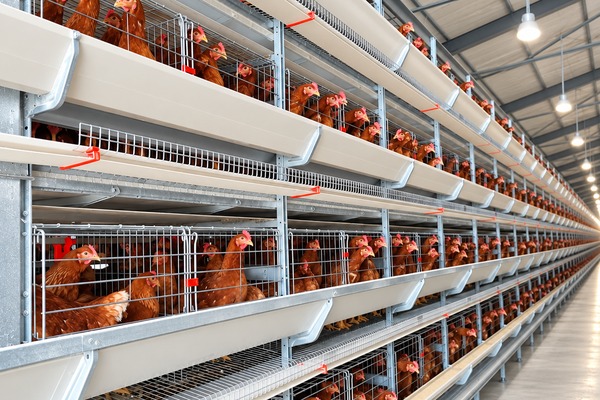
6. How Should a Poultry House Be Adapted to Kenya’s Climate?
Kenya has different climatic conditions across its highland, coastal and inland areas. A poultry house near Nairobi or Eldoret may require a different ventilation and temperature-management strategy from one in a hot or humid location. A 20,000-layer automatic cage house needs fresh air, removal of excess heat and moisture, management of dust and manure gases, and suitable temperature monitoring. Ventilation should be sized for the actual house structure and bird population.- Consider the location’s seasonal temperature and humidity.
- Choose suitable roofing, weather protection and drainage.
- Evaluate natural or mechanical ventilation according to the complete design.
- Verify air inlets, exhaust fans and airflow distribution.
- Assess whether cooling equipment is appropriate for the local climate.
- Provide lighting control, monitoring and emergency procedures.
- Keep the poultry house accessible for cleaning and maintenance.
7. What Supporting Farm Facilities Do You Need?
Even when the core cage equipment is automatic, the farm still needs reliable supporting infrastructure. These facilities may be included in a complete project proposal or arranged separately by the buyer.| Supporting Facility | Main Purpose |
|---|---|
| Feed Storage | Maintains feed availability and supports automatic distribution |
| Water Tank and Treatment | Provides reliable water quality and storage |
| Electrical Distribution | Supplies the motors, controllers, lighting and ventilation |
| Backup Power | Supports critical systems during electrical interruptions |
| Egg Handling Area | Provides space for egg collection, sorting and packing |
| Manure Management | Provides suitable waste handling and storage arrangements |
| Biosecurity | Supports controlled entry, hygiene and farm movement |
| Spare Parts and Maintenance | Supports inspection and equipment repairs |
8. How Much Does 20,000-Layer Farm Equipment Cost in Kenya?
The equipment cost depends on the cage model, quantity, automation package, environmental controls, freight and installation. An A-type cage-only quotation is not directly comparable with a complete automatic H-type poultry house equipment package. For reliable budgeting, request an itemized quotation instead of relying on a general price per chicken. Ask the supplier to separate the cost of cages, automatic equipment, ventilation and environmental controls, spare parts, installation and shipping. Also confirm whether the quotation includes the poultry house building, feed silo, water storage, backup generator, electrical installation, import charges and local labor. These items can significantly change the total project investment. For a related market reference, see How Much Do Battery Cage Systems Cost in Africa?. Historical regional prices should not be treated as current quotations for a fully automatic 20,000-layer H-type farm in Kenya.9. How to Request an Accurate Equipment Quotation
A supplier can provide a more useful technical proposal when the buyer shares the planned flock capacity, available building space, site conditions and automation requirements.- Capacity: Approximately 20,000 commercial laying hens.
- Location: County, town or project area in Kenya.
- Land or house size: Existing poultry house dimensions or available site length and width.
- Cage preference: 1200mm, 4-tier H-type model or a request to compare A-type and H-type.
- Automation: Feeding, drinking, manure removal, egg collection, ventilation and controls.
- Utilities: Electricity supply, water source and backup arrangements.
- Commercial terms: Preferred delivery destination and purchase schedule.
Frequently Asked Questions
What equipment is needed for a 20,000-layer chicken farm in Kenya?
A complete automatic farm needs layer cages, automatic feeding, nipple drinking, manure removal, egg collection, ventilation, lighting, environmental controls and supporting feed, water and electrical facilities.How many H-type cage sets are needed for 20,000 layers?
With LIVI’s 144-bird H-type cage model, the mathematical minimum is 139 sets. A preliminary four-row arrangement using 35 sets per row provides 140 sets and 20,160 installed positions.Is A-type or H-type better for a 20,000-layer farm?
For a new farm requiring integrated automatic systems, LIVI recommends H-type cages. A-type cages may be suitable for projects with different budgets, existing buildings or lower automation requirements.Can 20,000 layers fit in one poultry house?
Yes, subject to a suitable cage arrangement, service space, structural requirements, ventilation and equipment design. The final building dimensions must follow the engineering layout.Does a fully automatic poultry farm need backup power?
Critical electrically powered systems require an emergency operating plan. Where mechanical ventilation is used, suitable backup power and alarms should be considered in the final design.Does LIVI provide poultry farm layout and installation support?
LIVI can discuss preliminary cage layouts and equipment configurations based on the farm’s capacity and site conditions. On-site engineering support and remote technical guidance can be considered according to the project agreement.Conclusion: Equip the Whole Farm, Not Just the Cage Rows
For a new commercial farm with 20,000 laying hens in Kenya, LIVI recommends starting with its popular 1200mm, four-tier H-type cage system. An illustrative four-row arrangement using 140 sets provides 20,160 cage positions. The complete farm plan should coordinate automatic feeding, drinking, manure removal, egg collection, ventilation, environmental controls, power and water supply. The most reliable next step is to confirm the project site and obtain a preliminary poultry house layout with an itemized equipment quotation.LIVI AUTOMATIC LAYER FARM SOLUTIONS IN KENYA
Request Your 20,000-Layer Farm Layout & Equipment Quotation
Planning a commercial egg farm in Kenya? Share your project location, available land or poultry house dimensions, and required automatic equipment. LIVI can discuss a suitable H-type cage arrangement and complete poultry equipment proposal.- Planned capacity: 20,000 laying hens
- Project location in Kenya
- Land dimensions or existing poultry house size
- Required feeding, drinking, manure removal and egg collection systems
- Available power and water supply
- Expected construction or purchasing schedule
You might like:
 Farm in Uganda uses automatic chicken raising equipment from Livi Machinery
 Where to Buy 30,000 Layers Chicken Cages in Lagos?
 20,000 Layers Battery Cage Project in Senegal with Two Chicken Houses
 Use poultry farming automation equipment to raise the size of poultry farming
 20000 Birds Battery Cage System In Ghana Poultry Farm