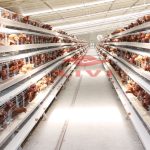
Complete Poultry Automation Guide
What Equipment Is Included in a Complete Automatic Poultry Farming System?
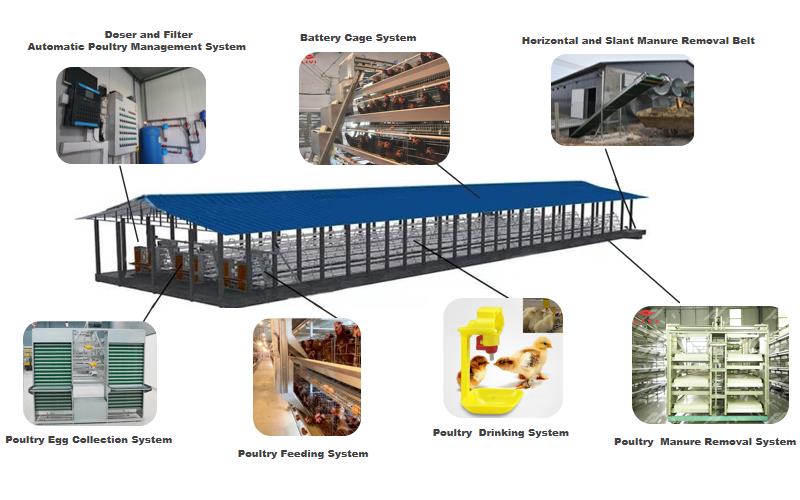
A complete automated poultry farming system normally includes poultry cages, automatic feeding, automatic drinking, manure removal, egg collection, ventilation, cooling, lighting, environmental control, feed storage, water supply and electrical control equipment.
For commercial layer farms, these systems should not be purchased as unrelated machines. Cage rows, feed routes, manure discharge, egg collection and ventilation should be designed together as one poultry farm production system.
Layer, pullet or broiler cage system
Feeding, drinking, manure and eggs
Fans, cooling pads and sensors
Electrical and environmental control
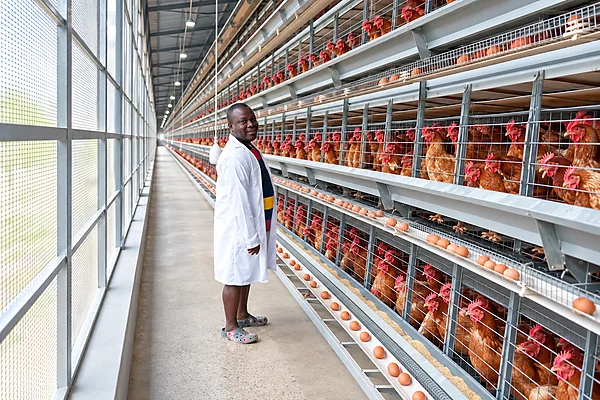
What Are the Main Parts of an Automated Poultry Farming System?
A complete system can be divided into three groups: bird housing equipment, production automation and environmental control. The exact configuration depends on whether the farm raises layers, pullets or broilers and on the total bird capacity.
| System | Main Equipment | Function |
|---|---|---|
| Cage system | Layer / pullet / broiler cages | Bird housing and farm capacity |
| Feeding | Silo, conveyor, feeding machine | Automatic feed distribution |
| Drinking | Nipple lines, filter, regulator | Continuous clean water supply |
| Manure removal | Manure belts and conveyors | Remove manure from poultry house |
| Egg collection | Egg belts, elevator, central conveyor | Move eggs to collection area |
| Environment | Fans, cooling pads, sensors, controller | Control temperature and airflow |
What Cage System Is Used in a Fully Automated Layer Farm?
For large automated layer farms, the Livi H-Type Cage System is usually the main equipment platform because feeding machines, manure belts and egg collection belts can be integrated directly into the multi-tier cage structure.
One commonly selected Livi model is the 4-tier H-type layer cage with a 1200 mm cage length. Its reference specification is 1200 mm × 625 mm × 480 mm with a capacity of 144 birds per set.
| Cage Type | Reference Capacity | Automation Level |
|---|---|---|
| A-type layer cage | 120 or 160 birds/set depending on model | Basic to semi-automatic |
| 1200 mm H-type layer cage | 144 birds/set | Suitable for full automation |
Buyers planning an automatic layer cage system should calculate cage quantity and poultry house layout together.
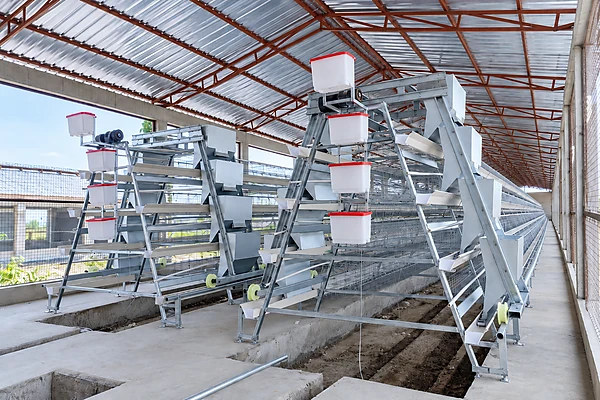
What Equipment Is Included in the Automatic Feeding System?
The automatic feeding system moves feed from storage to every cage row with minimal manual handling. A complete configuration normally includes a feed silo, feed conveyor, feeding machine and feed troughs.
Feed silo → feed conveyor → automatic feeding machine → feed troughs
The feeding-machine quantity and conveyor length should be calculated from the number of poultry houses, cage rows and cage-line length rather than bird capacity alone.
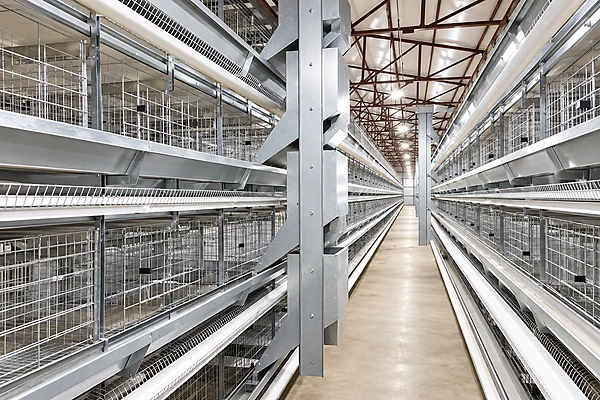
What Is Included in the Automatic Drinking System?
An automatic drinking system usually includes nipple drinkers, water pipes, filters, pressure regulators and water storage. Depending on the farm configuration, a medication or dosing unit can also be connected.
Water pressure should remain stable along the entire cage row. This makes filtration, pressure regulation and water-tank planning important parts of the complete poultry equipment configuration.
How Does an Automatic Manure Removal System Work?
In an H-type layer cage system, a manure belt is installed beneath each cage tier. Manure falls directly onto the belt and can be transported toward the end of the poultry house.
A cross conveyor can then move the manure outside the building to a storage, treatment or transport area. Regular manure removal helps reduce manure accumulation inside a high-density poultry house.
Cage tier → PP manure belt → cross conveyor → outside manure area
What Equipment Is Used for Automatic Egg Collection?
A fully automated layer farm can use egg belts installed along each cage tier. Eggs roll from the cage floor onto the belt and move toward an elevator or collection system.
The Livi Automatic Egg Collection System can include cage-level egg belts, egg elevators and a central egg conveyor that transfers eggs toward the collection or packing area.
Cage → egg belt → egg elevator → central conveyor → egg collection area

What Ventilation and Cooling Equipment Is Needed?
High-density automated poultry houses need a ventilation system designed around bird capacity, house dimensions and local climate. The equipment can include exhaust fans, cooling pads, air inlets, temperature sensors, humidity sensors and an environmental control cabinet.
| Equipment | Function |
|---|---|
| Exhaust fans | Remove heat, humidity and polluted air |
| Cooling pads | Cool incoming air in hot conditions |
| Air inlets | Control fresh-air distribution |
| Sensors | Monitor temperature and humidity |
| Control cabinet | Coordinate fans, cooling and environmental settings |
The Livi Ventilation Design Standard should match ventilation equipment with actual cage density and poultry house size rather than using the same fan configuration for every farm.
What Other Equipment Should Be Included in a Complete System?
A complete automated farm also needs supporting infrastructure. These components are sometimes missing from simple cage quotations but are important for daily operation.
| Supporting Equipment | Why It Is Needed |
|---|---|
| Feed silo | Stores bulk feed outside the poultry house |
| Water tank | Provides reserve water for drinking systems |
| Lighting | Supports controlled lighting schedules |
| Electrical cabinet | Controls motors and automatic equipment |
| Backup power | Supports critical equipment during power interruptions |
How Should All Poultry Equipment Be Integrated into the Farm Layout?
Equipment should be designed around the poultry house rather than purchased independently. The Livi Poultry Farm Layout Solution coordinates cage rows, service aisles, feed silos, manure outlets, egg collection routes, fans, cooling pads and control equipment.
For medium and large farms, three or four H-type cage rows are often practical starting layouts, but the final arrangement depends on land width, poultry house length, actual bird capacity and ventilation requirements.
Before requesting a complete automated poultry farming system, buyers should provide the target capacity, poultry type, land dimensions, house dimensions, climate, power supply, water source and future expansion plan.
FAQ About Complete Automated Poultry Farming Systems
What are the five main automatic systems in a layer farm?
The five main systems are automatic feeding, automatic drinking, manure removal, egg collection and environmental control. These systems work together with the layer cage system and poultry house layout.
Does a fully automated poultry farm still need workers?
Yes. Automation reduces repetitive work but does not eliminate farm management. Workers are still needed to inspect birds, monitor feed and water, check motors and belts, manage mortality, record production data and carry out preventive maintenance.
Is H-type cage equipment necessary for full automation?
H-type cages are particularly suitable for highly automated commercial layer farms because manure belts, egg belts and feeding systems are integrated with the multi-tier cage structure. Smaller projects can also automate some functions with A-type cages.
Can the automation level be customized?
Yes. The final system can be configured according to farm capacity, available labor, electricity reliability, climate and investment plan. Some farms automate feeding and manure removal first, while larger commercial projects may install a complete automatic system from the beginning.
What information is needed before getting an equipment quote?
Provide bird type, target capacity, country, land dimensions, existing or planned poultry house size, desired automation level, local climate, voltage, water source, manure handling plan and future expansion target. These details allow the supplier to design the actual equipment configuration instead of quoting cage units only.
Planning a Fully Automated Poultry Farm?
Livi Machinery can configure the cage system, automatic feeding, drinking, manure removal, egg collection, ventilation, cooling, lighting and environmental control according to your bird capacity, poultry house dimensions, climate, labor conditions and expansion plan.