How Many Chickens Can One Layer Cage Set Hold?
One layer cage set can commonly hold 120, 144 or 160 laying hens, depending on the cage structure and number of tiers. Among Livi Machinery’s commonly selected configurations, the 120-bird and 160-bird models are A-type layer cages, while the 144-bird model is a 4-tier H-type layer cage.
The right capacity depends on farm size, poultry house dimensions, automation requirements and future expansion—not simply on how many birds can be placed in one cage set.
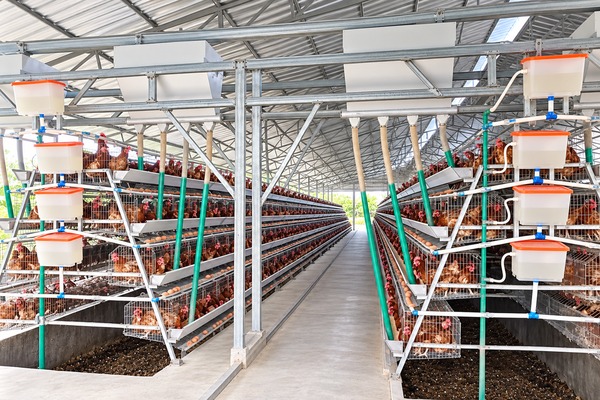
What Are the Popular Layer Cage Capacities?
| Layer Cage Model | Capacity Per Set | Typical Application |
|---|---|---|
| A-type layer cage | 120 birds/set | Small and medium layer farms |
| 4-tier 5-door A-type layer cage | 160 birds/set | Medium commercial egg farms |
| 4-tier H-type layer cage | 144 birds/set | Automatic commercial layer farms |
When Should You Choose a 120-Bird Layer Cage?
The 120-bird A-type layer cage is suitable for farmers who want a simpler cage system, easier daily inspection and relatively flexible poultry house design. It is commonly considered for small and medium layer projects where the owner does not need a high-density fully automatic H-type system.
Drinking can use automatic nipple lines, while feeding, manure cleaning and egg collection can be configured according to the farm budget and available labor.
How Does the 160-Bird A-Type Layer Cage Work?
The Livi 4-tier 5-door A-type layer cage has a reference specification of 1950 mm × 450 mm × 410 mm and accommodates 160 birds per set.
This model is suitable for farms that need more capacity per cage set while retaining the relatively simple structure of an A-type system. It can be combined with automatic drinking, feeding equipment and mechanized manure removal.
| Farm Target | Calculation | Approx. Cage Sets |
|---|---|---|
| 10,000 layers | 10,000 ÷ 160 | About 63 sets |
| 20,000 layers | 20,000 ÷ 160 | 125 sets |
Why Is the 144-Bird H-Type Layer Cage Popular?
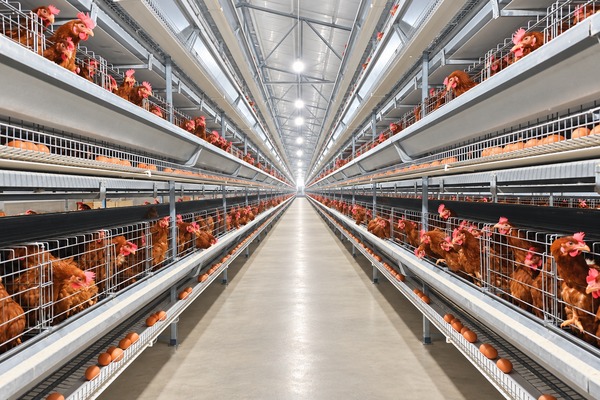
The Livi 4-tier H-type layer cage uses the commonly selected 1200 mm × 625 mm × 480 mm cage module and accommodates 144 birds per set.
Compared with a conventional A-type arrangement, the H-type system is designed for higher automation. Automatic feeding, nipple drinking, manure belts and egg collection belts can be integrated directly with the cage rows.
For commercial projects where land saving, lower repetitive labor and future expansion are important, the 144-bird H-type layer cage system is a practical configuration.
Which Layer Cage Capacity Should You Choose?
| If Your Priority Is… | Suitable Option |
|---|---|
| Simple cage layout and flexible management | 120-bird A-type |
| More birds per A-type cage set | 160-bird A-type |
| Automatic commercial egg production | 144-bird H-type |
The final cage quantity should always use: Total Birds ÷ Birds Per Set = Required Cage Sets. The actual installed capacity can then be adjusted to create complete and regular cage rows.
FAQ About Layer Cage Capacity
How many chickens can one layer cage set hold?
Common Livi layer cage configurations can accommodate 120, 144 or 160 laying hens per set. The exact capacity depends on whether the farm uses an A-type or H-type cage and on the selected tier configuration.
Is 144 birds less efficient than 160 birds per set?
Not necessarily. The 144-bird model is an H-type system designed for vertical cage rows and automation, while the 160-bird model is an A-type configuration. Farm efficiency should be evaluated from total house capacity, cage-row layout and equipment configuration rather than capacity per individual set alone.
What information is needed to calculate my cage quantity?
Provide the target number of laying hens, available poultry house or land dimensions, preferred cage type and automation requirements. Livi Machinery can then calculate cage quantity, actual installed capacity and a suitable poultry house layout.
Which Layer Cage Capacity Fits Your Farm?
Livi Machinery can compare 120-bird, 160-bird and 144-bird layer cage configurations according to your farm capacity, poultry house dimensions, labor conditions and automation plan, then provide cage quantity and layout calculations.