

LIVI POULTRY EQUIPMENT | COMMERCIAL LAYER FARM INVESTMENT GUIDE
How Much Does 50,000-Layer Automatic Poultry Farm Equipment Package Cost?
Planning a poultry farm with 50,000 laying hens is a major commercial investment. Before requesting an equipment quotation, buyers need to know which systems are included, how many H-type cage sets are required, and whether the farm should be designed as one large poultry house or two separate houses. This guide explains the 50000 layer poultry farm equipment cost, the main cost components, and the factors that change the final price. It uses LIVI’s recommended 1200mm H-type layer cage model with 144 birds per set and compares practical single-house and two-house configurations.QUICK ANSWER
The cost of a 50,000-layer automatic poultry farm equipment package depends on cage quantities, automatic feeding, drinking, manure removal, egg collection, ventilation, and the poultry house layout. LIVI recommends its 1200mm, 4-tier H-type layer cage model with 144 birds per set. A single-house project requires at least 348 sets, while two 25,000-layer houses require at least 174 sets each. The final equipment cost differs by layout, automation specification, local climate, shipping, and installation requirements. Request an itemized quotation for reliable current pricing.50,000
Target Layers
144
Birds per Cage Set
348+
Minimum Cage Sets
1. How Much Should You Budget for a 50,000-Layer Automatic Equipment Package?
There is no reliable universal fixed price for a complete 50,000-layer automatic poultry equipment package. The final cost depends on the H-type cage model, number of sets, automatic equipment, environmental control design, poultry house configuration, delivery destination, and installation scope. As historical context, some previously published LIVI articles have mentioned estimated equipment budgets of approximately USD 70,000–120,000 for a 50,000-layer H-type system in Nigeria. Another older equipment package article described a broader estimated range of USD 78,000–130,000. These are historical website estimates with different assumptions, not verified current quotations for LIVI’s recommended 144-bird, 1200mm model. Because equipment specifications, automation scope, freight and installation conditions can change, buyers should not use either historical range as a guaranteed present-day package price. The appropriate way to prepare a budget is to request an itemized bill of materials for the actual farm layout.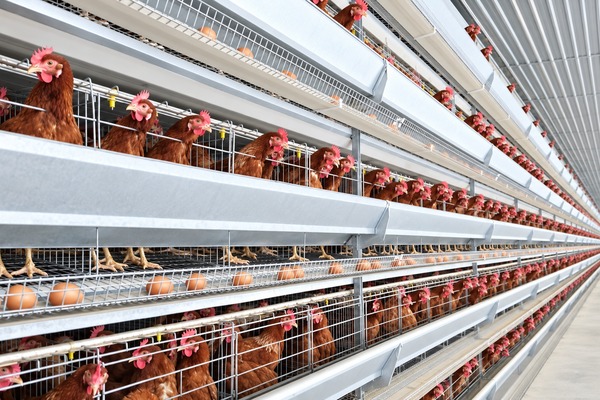
What Is Included in the Equipment Cost?
| Cost Category | Equipment and Components | What Changes the Price? |
|---|---|---|
| H-Type Layer Cages | Galvanized cage structure, mesh, doors, feed troughs and fittings | Model, steel specification, sets, rows and accessories |
| Automatic Feeding | Feeding machines, feed transport equipment, motors and controls | Number of rows, equipment length and silo requirements |
| Nipple Drinking | Drinking lines, regulators, filters, fittings and controls | Number of cage rows and water treatment scope |
| Manure Removal | Manure belts, drive equipment, cross and discharge conveyors | Cage length, number of rows and manure outlet design |
| Egg Collection | Egg belts, elevators and central collection where specified | Collection points, transfer distance and house arrangement |
| Environmental Equipment | Fans, cooling equipment as required, lighting, sensors and controllers | Local climate, house size and ventilation design |
| Installation and Support | Spare parts, documentation, installation guidance and agreed services | Destination, labor responsibilities and technical support scope |
Budget note: A cage-only price, a cage-plus-automation quotation, and a complete poultry house equipment quotation describe different products. Compare the same equipment scope before deciding which offer is more economical.
2. Why Does LIVI Recommend the 1200mm H-Type Layer Cage?
For this commercial farm size, LIVI recommends its 4-tier, 2-door H-type layer cage system with a reference cage specification of 1200 × 625 × 480 mm and a rated capacity of 144 birds per set. This 1200mm configuration is one of LIVI’s preferred and popular models among its customers. It supports automatic feeding, nipple drinking, belt manure removal and egg collection within an integrated cage system.| Specification | LIVI Recommended Model |
|---|---|
| Cage Type | H-Type Layer Cage |
| Number of Tiers | 4 |
| Cage Configuration | 2-door reference model |
| Reference Cage Dimensions | 1200 × 625 × 480 mm |
| Rated Bird Capacity | 144 birds per set |
| Recommended Automation | Feeding, drinking, manure removal and egg collection |
| Suitable Project | Commercial layer farms subject to engineering design |
3. How Many H-Type Cage Sets Are Needed for 50,000 Layers?
With LIVI’s recommended 144-bird H-type layer cage model, the minimum number of cage sets is calculated by dividing the planned bird capacity by the rated capacity per set. 50,000 ÷ 144 = 347.22, rounded up to 348 sets. This calculation establishes the minimum rated cage positions. However, commercial poultry houses require practical row arrangements, which can result in a slightly larger installed capacity.Option A: One Poultry House for 50,000 Layers
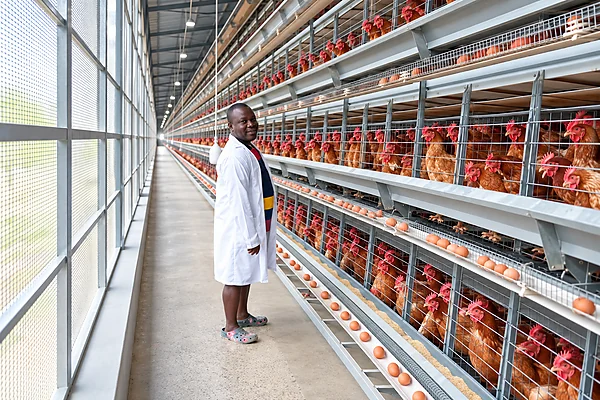
A preliminary single-house arrangement could use four cage rows with 87 sets per row:- Number of houses: 1
- Number of cage rows: 4
- Cage sets per row: 87
- Total cage sets: 348
- Installed positions: 50,112 birds
Option B: Two Poultry Houses with 25,000 Layers Each
Another practical solution is to divide the project into two poultry houses, each accommodating approximately 25,000 laying hens. The equipment for each house should be calculated separately. 25,000 ÷ 144 = 173.61, rounded up to 174 sets per house. For example, each house could use four cage rows with 44 sets per row:- Number of houses: 2
- Target capacity per house: 25,000 layers
- Example arrangement: 4 rows × 44 sets per house
- Cage sets per house: 176
- Installed positions per house: 25,344
- Total across two houses: 352 sets and 50,688 positions
| Item | One-House Solution | Two-House Solution |
|---|---|---|
| Target Layers | 50,000 | 25,000 per house |
| Recommended Cage | 4-tier, 144 birds/set | 4-tier, 144 birds/set |
| Minimum Cage Sets | 348 | 174 per house |
| Example Cage Arrangement | 4 rows × 87 sets | 4 rows × 44 sets per house |
| Installed Positions | 50,112 | 50,688 total |
| Automation | Designed for one house | Designed independently for each house |
4. Is One Poultry House or Two Houses More Cost-Effective?
Neither arrangement is automatically the cheapest or best for every 50,000-layer project. The correct choice depends on land availability, building conditions, management preferences, infrastructure, ventilation requirements and plans for future expansion. A single-house layout may allow certain operating functions to be centralized. It can reduce the need for duplicate house-level equipment, but it also requires a building large enough to accommodate the cage arrangement and suitable environmental control system. A two-house layout may suit farms that prefer separated flock management, a phased construction plan or smaller individual poultry houses. However, each building needs suitable feeding, drinking, manure removal, egg collection, ventilation, lighting and electrical control arrangements.Why Can a Two-House Layout Change the Equipment Cost?
- Separate feeding machinery and distribution lines may be required.
- Each house needs its own cage-row manure collection and discharge arrangement.
- Egg collection equipment must be designed for each building.
- Ventilation and environmental control systems must serve each house independently.
- Electrical distribution and control cabinets may need to be duplicated.
- Central feed storage, water supply or other shared facilities may still be possible, subject to design.
5. What Automatic Systems Should Be Included in the 50,000-Layer Package?
A complete commercial egg farm equipment package should be designed around the daily production process. The H-type cages are the housing structure, while the automatic systems deliver feed and water, remove manure, transport eggs and support the poultry house environment.Automatic Feeding and Drinking
The feeding package may include feeding machines, feed transfer conveyors, motors, controls and connection to feed storage. Confirm whether the quotation includes a feed silo, main transfer equipment and the feeding machinery for each cage row. The drinking system should include nipple drinking lines, pressure regulators, filters and supporting fittings. Water tanks, pumps and water treatment may be quoted separately, so the complete water supply scope should be confirmed.Automatic Manure Removal
H-type layer cages commonly use manure belts beneath the cage tiers. The system can also require cross conveyors and external discharge equipment. The final arrangement depends on the number of rows, cage length and manure collection area. In a two-house farm, manure collection should be planned separately for each building, even if the farm uses a shared manure handling or treatment area.Automatic Egg Collection
The egg collection package may include row egg belts, elevators, transfer conveyors and central collection equipment as specified. Buyers should confirm exactly where eggs are delivered and whether any manual handling remains. Egg grading and packing equipment should be identified separately if the farm requires these functions. They should not be assumed to be part of every automatic cage quotation.Ventilation, Cooling and Environmental Controls
A farm of 50,000 layers needs an environmental control design suitable for its actual location, building arrangement, climate and expected operating conditions. The system may include fans, air inlets, cooling equipment where appropriate, lighting, sensors, alarm devices and controllers. Cooling specifications cannot be standardized solely by flock size. The final selection must consider local temperature, humidity, house dimensions, airflow requirements and emergency power arrangements.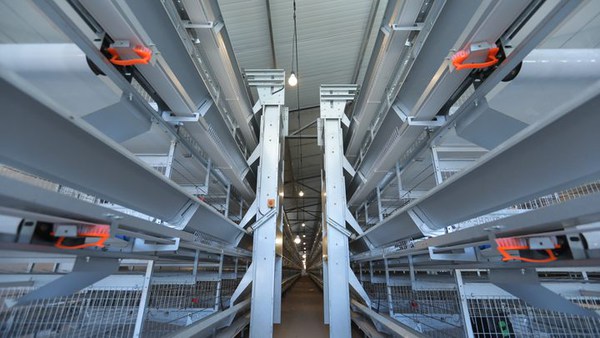
6. Does the Equipment Package Include Poultry House Construction?
Not necessarily. A complete automatic poultry equipment package and a complete operating poultry farm are different investment scopes. The equipment quotation generally focuses on the cages and the agreed automatic systems. Depending on the contract, the buyer may still need to arrange the following items:- Land purchase, site preparation and civil works
- Poultry house foundations, structure, walls and roofing
- Main electrical infrastructure and installation
- Emergency generator and backup arrangements
- Water storage, pumps and water treatment
- Feed and egg storage facilities
- Manure storage or treatment area
- International shipping, import charges and destination handling
- Local labor, installation tools and commissioning services where excluded
- Pullets, feed, staffing and initial farm working capital
7. What Should You Check Before Comparing Equipment Prices?
Two automatic poultry equipment quotations should be compared on an equivalent technical and commercial basis. A lower price does not automatically mean a better offer if important equipment or project services are excluded.- Confirm the 1200mm, 144-bird H-type cage specification and total cage sets.
- Compare the same one-house or two-house design assumptions.
- Check automatic feeding and drinking equipment quantities.
- Verify manure removal and egg collection endpoints.
- Confirm environmental control equipment for each poultry house.
- Request a preliminary equipment layout and bill of materials.
- Check warranty, spare parts, delivery time and installation responsibilities.
- Confirm the delivery term, named port or location, freight and exclusions.
8. How Does LIVI Prepare a 50,000-Layer Equipment Quotation?
For a 50,000-layer farm, the quotation should begin with the project conditions rather than a fixed price per bird. LIVI can assess the required capacity, available poultry house or land dimensions, local climate, automation level and preferred building arrangement. When the site permits both one-house and two-house options, the two arrangements can be evaluated separately. The proposal should show the cage sets, cage rows, automatic equipment and house-level systems for each alternative. Depending on the project location and contract, installation may involve the customer’s own team working with LIVI remote technical guidance, LIVI engineers providing on-site support, or an available local installation partner. Drawings, manuals, videos and technical communication can support the agreed installation method. For a more accurate proposal, prepare these details before sending an enquiry:- Planned capacity: 50,000 laying hens
- Project country, city and nearest delivery port
- Available land dimensions or existing house measurements
- Preferred arrangement: one house, two houses or supplier recommendation
- Required feeding, drinking, manure removal and egg collection systems
- Local electrical supply and water source
- Expected construction and equipment purchase schedule
9. Frequently Asked Questions
How much does a complete 50,000-layer automatic poultry equipment package cost?
The final price depends on the cage model, cage quantities, automatic systems, environmental controls, building arrangement and supply scope. Previously published LIVI estimates provide historical context, but a current quotation should be calculated using the actual 144-bird H-type cage configuration and project requirements.How many 1200mm H-type layer cage sets are needed for 50,000 hens?
With 144 birds per set, the theoretical minimum is 348 cage sets. A single-house example with four rows of 87 sets provides 50,112 installed bird positions.Can 50,000 laying hens be divided between two poultry houses?
Yes. Two poultry houses can be designed for approximately 25,000 hens each. Each house needs at least 174 sets mathematically. A preliminary four-row layout of 44 sets per row provides 25,344 bird positions per house.Is one poultry house cheaper than two houses?
One house may reduce some duplicated operating equipment, but cost efficiency depends on the building design and local conditions. Two-house projects often need separate house-level feeding, manure, egg collection and environmental systems. Both options should be quoted before deciding.Does a complete automatic layer cage quotation include ventilation and cooling?
Not always. Some quotations cover cages and core automation only. Confirm whether ventilation fans, cooling equipment, lighting, sensors and control cabinets are included for each poultry house.Does LIVI provide preliminary poultry house layout design?
Yes. LIVI can prepare a preliminary equipment arrangement based on the planned bird quantity, available land or existing poultry house dimensions, target automation and project conditions. Final structural requirements should be reviewed by qualified engineers.Conclusion: Compare the Full 50,000-Layer Equipment Package
For a 50,000-layer commercial egg farm, LIVI recommends a 4-tier H-type layer cage system using its popular 1200mm model with 144 birds per set. The project may be designed as one large poultry house or two houses of approximately 25,000 hens each, depending on the available site and farm management requirements. The final equipment cost is determined by more than the cage quantity. Automatic feeding, drinking, manure removal, egg collection, environmental controls, supporting equipment, shipping and installation all affect the investment. A complete engineering layout and itemized quotation provide a more reliable basis for deciding between the two options.50,000-LAYER AUTOMATIC POULTRY FARM SOLUTIONS
Get Your 50,000-Layer Equipment Package & Farm Layout
Planning a commercial egg farm with 50,000 laying hens? LIVI can discuss suitable H-type cage configurations and prepare a preliminary one-house or two-house equipment proposal based on your site conditions.- Project country and destination
- 50,000-layer planned capacity
- Land size or existing poultry house dimensions
- One-house, two-house or undecided arrangement
- Required automatic equipment and expected project timeline
You might like:
 Battery Cage System for Layers Improve Egg Production with Top Poultry Cage Suppliers
 Price of poultry chicken cages for 50000 layers in Uganda
 Premium A-Type Egg Layer Cages for 10,000 Chickens Poultry Solutions In Ghana
 Do You Know These Vital Knowledge About Chicken Farm Equipment?
 A to Z Poultry Farming Equipment Solution