

LIVI POULTRY EQUIPMENT | COMMERCIAL EGG FARM SOLUTIONS
Complete Poultry Equipment List for a 30,000-Layer Automatic Egg Farm
Building a 30,000-layer egg farm requires more than buying chicken cages. The entire production system must work together: feeding, drinking, egg collection, manure removal, ventilation, water supply, electricity, and daily farm management. This guide provides a complete 30,000 layer farm equipment list for commercial egg producers. It explains the recommended H-type cage configuration, calculates cage quantities, identifies essential automatic equipment, and covers the supporting facilities that buyers often overlook when planning a poultry farm.QUICK ANSWER
A complete 30,000-layer automatic egg farm should include a 4-tier H-type layer cage system, automatic feeding and nipple drinking, manure belt removal, egg collection, ventilation, lighting, and environmental controls. LIVI’s 192-bird H-type cage model requires at least 157 sets mathematically; a four-row example with 160 sets provides 30,720 installed positions. The project also needs feed storage, water supply, electrical and backup power systems, egg handling, manure management, and biosecurity equipment. Final quantities depend on the poultry house layout, local climate, and selected automation package.30,000
Planned Layers
160
Example Cage Sets
30,720
Installed Positions
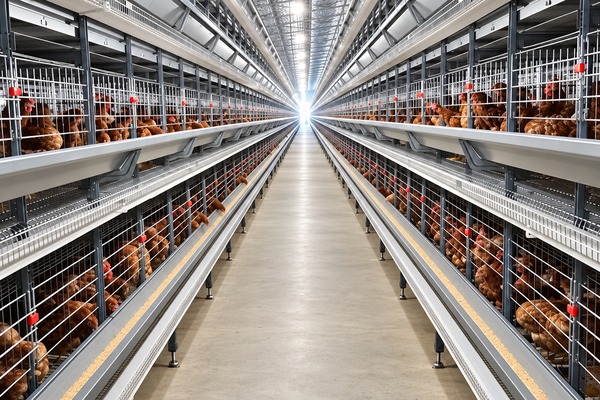
1. Complete Poultry Equipment List for 30,000 Laying Hens
A 30,000-layer farm should be planned as a complete egg production facility, not simply a building filled with cages. The equipment list needs to cover the birds’ daily requirements, waste removal, egg handling, environmental control, and the infrastructure supporting the poultry house.| Equipment Category | Recommended Configuration | Project Scope |
|---|---|---|
| H-Type Layer Cages | 4-tier H-type system; 160 sets in the 192-bird reference layout | Core housing |
| Automatic Feeding | Feeding machines, feed transport equipment, motors and controls | Core automation |
| Nipple Drinking | Nipple lines, pressure regulators, filters and fittings | Core automation |
| Manure Removal | Manure belts, drive equipment, cross and discharge conveyors | Core automation |
| Egg Collection | Row egg belts, collection equipment and central collection where specified | Core automation |
| Ventilation | Exhaust fans, air inlets and ventilation controls | Essential; engineered |
| Cooling | Cooling pads and pumps if required by climate design | Climate-dependent |
| Lighting | Poultry-house lighting and scheduling controls | Essential |
| Environmental Controls | Controller, sensors, alarms and monitoring equipment | Project-dependent |
| Feed Storage | Feed silo or suitably designed feed storage and delivery | Supporting facility |
| Water Supply | Storage tank, pump, filtration and water delivery | Supporting facility |
| Electrical Supply | Main distribution, wiring and suitable emergency backup | Supporting facility |
| Egg Handling | Egg room, trays, handling tables and storage equipment | Supporting facility |
| Manure Handling | External storage, transport or treatment arrangement | Supporting facility |
| Biosecurity | Controlled access, disinfection and protective supplies | Farm operation |
2. How Many H-Type Layer Cage Sets Are Needed for 30,000 Hens?
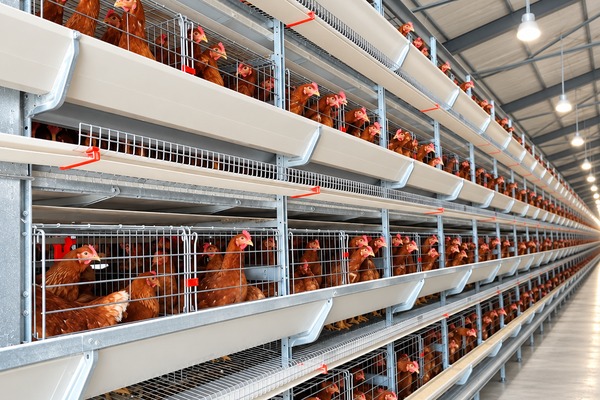
For a new commercial 30,000-layer project, LIVI generally recommends one poultry house equipped with 4-tier H-type layer cages. This provides a practical starting point for integrating automatic feeding, manure removal and egg collection. The number of cage sets depends on the selected model. Two common LIVI reference configurations are shown below.| H-Type Model | Birds per Set | Minimum Sets | Example Layout | Installed Capacity |
|---|---|---|---|---|
| 4-tier, 4-door; 1800 × 600 × 430 mm reference cage dimensions | 192 | 157 | 4 rows × 40 sets | 30,720 |
| 4-tier, 2-door; 1200 × 625 × 480 mm reference cage dimensions | 144 | 209 | 4 rows × 53 sets | 30,528 |

3. Automatic Feeding and Nipple Drinking Equipment
Feeding and water supply are essential daily operations. For 30,000 laying hens, equipment should be designed to distribute feed consistently and provide reliable drinking water throughout every cage row.Automatic Feeding System
The automatic feeding system typically includes feeding machines operating along cage rows, feed transport equipment, motors, control components and suitable connections to feed storage. A feed silo can be included as part of the project if required, but its capacity should be based on feed consumption, delivery frequency and farm operation plans. Before purchasing, verify whether the equipment quotation includes the external silo, silo discharge, main feed conveyor, cage-row feeders and required electrical components. A quotation for automatic feeders does not necessarily include every component from feed storage to the cage troughs.Nipple Drinking System
A suitable nipple drinking system includes drinking pipelines, nipples, pressure regulators, fittings and water filtration as specified. The farm also needs an adequate water source, reliable pumping and storage arrangements, and a way to monitor water availability. Water storage and pump selection cannot be accurately determined from the bird count alone. They depend on bird age, consumption, environmental conditions, required reserve capacity and water source reliability.4. Automatic Manure Removal and Egg Collection Systems
For a large H-type layer farm, the manure removal and egg collection systems must be integrated with the cage structure and poultry house layout. These systems handle two important daily production flows: waste leaving the house and eggs reaching the collection area.Automatic Manure Belt System
Manure belts installed beneath the cage tiers transport manure to the end of the cage lines. Depending on the design, cross conveyors and inclined discharge conveyors may be required to move manure outside the poultry house. The full equipment list should distinguish the belts and drives fitted to the cages from the external manure handling system. The farm must also plan where manure will be stored, transported or treated after discharge.Automatic Egg Collection System
An automatic egg collection system can include egg belts along the cage rows, elevators or transfer mechanisms and a central collection line. The final configuration depends on the number of rows, egg collection point and egg room layout. Automatic egg collection reduces repetitive manual carrying from cage rows, but the farm still needs egg inspection, handling, packing or storage procedures. Egg grading machines and packing equipment should be listed separately when required.5. Ventilation, Cooling, Lighting and Environmental Controls
Installing 30,000 layers in one poultry house requires a suitable environmental control design. The ventilation equipment must be selected based on the local climate, poultry house dimensions, bird heat load and operating conditions.| System | Equipment to Consider | Design Requirement |
|---|---|---|
| Ventilation | Exhaust fans, air inlets, shutters and controls | Required airflow and temperature management |
| Cooling | Cooling pads, pump, distribution system and controls | Climate-dependent; humidity must be considered |
| Lighting | Suitable luminaires, wiring and light scheduling controls | Appropriate laying hen lighting program |
| Environment Monitoring | Temperature and humidity sensors, alarms, controllers | Reliable monitoring and response |
| Emergency Operation | Backup power and alarm arrangements | Maintain critical systems during interruptions |
6. What Supporting Facilities Does a 30,000-Layer Farm Need?
The cage house is the center of egg production, but a commercial farm cannot operate effectively without supporting facilities. These are not always included in a poultry equipment supplier’s standard quotation.| Supporting Facility | Main Purpose |
|---|---|
| Feed Storage Area | Stores feed and supports delivery to the feeding system |
| Water Storage and Treatment | Maintains the quality and availability of drinking water |
| Electrical Distribution | Supplies safely configured power to motors and controls |
| Backup Generator | Supports critical equipment during grid interruptions |
| Egg Handling Room | Provides space for collection, inspection and packing |
| Manure Storage or Treatment | Supports controlled handling of removed waste |
| Biosecurity Facilities | Controls entry, movement and disinfection |
| Maintenance and Spare Parts | Supports inspection, repairs and equipment continuity |
7. What Size Poultry House Is Required for 30,000 Layers?
One poultry house equipped with 4-tier H-type cages is the recommended preliminary direction for a new 30,000-layer automatic egg farm. However, the complete building dimensions should not be determined using the bird count alone. For the 192-bird cage model, a reference row with 40 cage sets and nominal cage module length of 1.8 meters results in approximately 72 meters of cage-module length. This figure does not represent the final poultry house length. Additional allowances are needed for row-end equipment, clearances, egg collection, manure handling, structural elements and access. The width of the house depends on the cage rows, operating aisles, maintenance access and supporting systems. Building height must accommodate the cage structure, machinery, ventilation and other required clearances.- Confirm the land length and width or existing poultry house measurements.
- Select the cage model and final bird capacity.
- Determine the number of rows and sets per row.
- Reserve appropriate aisles and service areas.
- Coordinate ventilation, egg collection, manure removal and utilities.
- Have qualified professionals verify the final construction design.
8. Essential Equipment vs Optional Upgrades
When preparing the purchasing budget, distinguish equipment required for the specified automatic operating system from items selected according to the local site, desired processing capacity or expansion plans.| Essential for the Proposed Automatic System | Project-Dependent or Additional Equipment |
|---|---|
| H-type layer cages and fittings | Additional reserved cage capacity |
| Automatic feeding and drinking | Advanced feed monitoring or dosing equipment |
| Automatic manure belt removal | Additional manure processing equipment |
| Automatic egg collection | Egg grading, counting or advanced packing line |
| Required ventilation and lighting | Cooling configuration according to climate |
| Basic control and safety arrangements | Advanced remote monitoring and analytics |
| Adequate water and power supply | Extra water reserve or larger backup systems |
9. What Should Be Included in the Equipment Quotation?
A complete equipment list becomes useful for purchasing when it is converted into an itemized bill of materials and linked to a preliminary poultry house layout. Ask the supplier to identify the cage model, rated capacity, number of sets, automatic equipment quantities, supporting components, technical specifications, spare parts and installation guidance. Buyers should also confirm whether the quotation includes external feed silos, water storage, ventilation, electrical installation, backup power, freight, local duties, installation labor and commissioning. These costs may fall outside the standard equipment supply. For more detail, read How to Compare Poultry Equipment Suppliers: A Quotation Guide for Farm Buyers.10. What Information Does LIVI Need to Prepare a 30,000-Layer Equipment Plan?
The planned number of laying hens is the starting point, but it is not enough to calculate a reliable final equipment quotation. A supplier should also understand the site and farm operation requirements.- Farm capacity: Approximately 30,000 laying hens and any expansion plans.
- Project location: Country, city and relevant climate conditions.
- Land or house dimensions: Available site size or existing house length, width and height.
- Automation requirements: Feeding, drinking, manure removal, egg collection and climate control.
- Power and water: Voltage, available electrical service, backup power and water source.
- Delivery destination: Destination city or port and required shipping scope.
- Project schedule: Expected construction and equipment purchase timing.
11. Frequently Asked Questions
What equipment is needed for a 30,000-layer automatic poultry farm?
The main equipment includes H-type layer cages, automatic feeding, nipple drinking, manure removal, egg collection, ventilation, lighting and environmental controls. The farm also needs feed storage, water supply, power, egg handling and manure management facilities.How many H-type cage sets are needed for 30,000 hens?
With a rated capacity of 192 birds per set, the mathematical minimum is 157 sets. A four-row layout using 160 sets provides 30,720 bird positions. With a 144-bird model, the mathematical minimum is 209 sets, and a four-row example uses 212 sets.Can a 30,000-layer farm use only one poultry house?
Yes. One correctly designed poultry house with a 4-tier H-type cage system can provide the required installed capacity. Final dimensions depend on the cage model, operating aisles, service equipment and ventilation design.Does a complete cage system include ventilation equipment?
Not automatically. Ventilation is necessary for the poultry house, but suppliers may quote cage equipment and environmental control separately. Buyers should confirm fans, cooling, sensors and controls in the project scope.Are feed silos and water tanks included with automatic chicken cages?
They may be included in a complete project package or supplied separately. The quotation should clearly identify external feed storage, water storage, pumping and treatment equipment.Can LIVI prepare a poultry house layout before construction?
Yes. LIVI can prepare a preliminary cage and equipment arrangement based on the planned capacity, available land, existing house dimensions and required automatic systems. Final building construction details require appropriate engineering review.Conclusion: Plan the Whole Egg Production System, Not Just the Cages
For a new commercial farm with 30,000 laying hens, LIVI recommends beginning with a 4-tier H-type cage solution and then designing automatic feeding, drinking, manure removal, egg collection and environmental control around the poultry house. A complete poultry equipment list should also account for feed and water storage, reliable electricity, egg handling, manure management, biosecurity and routine maintenance. Confirming these systems together makes project planning and supplier quotations more useful.COMPLETE AUTOMATIC LAYER FARM SOLUTIONS
Request Your 30,000-Layer Farm Equipment List & Layout
Planning a new commercial egg farm? Share your project details with LIVI to discuss H-type cage configurations, automatic equipment, a preliminary poultry house layout and a project-specific equipment quotation.- Planned capacity: approximately 30,000 laying hens
- Project country and location
- Available land or poultry house dimensions
- Required automatic equipment
- Project purchasing schedule


