LIVI POULTRY EQUIPMENT | COMMERCIAL FARM BUYER’S GUIDE
What Should Be Included in an Automatic Layer Cage System Quotation?
Buying an automatic layer cage system is not just a question of comparing cage prices. For a commercial egg farm, the quotation should explain exactly what equipment will be supplied, how many birds it can accommodate, what automation is included, and which services or project costs are excluded. Whether you are planning a farm for 10,000, 20,000, 30,000 or 50,000 laying hens, this purchasing guide will help you review an automatic layer cage system quotation before making a deposit.QUICK ANSWER
A complete automatic layer cage system quotation should specify the cage model, dimensions, tiers, bird capacity, number of sets, and a detailed equipment list covering automatic feeding, nipple drinking, manure removal, egg collection, and control systems. It should also clarify whether ventilation, cooling, lighting, feed silos, spare parts, installation support, and shipping are included. For commercial layer farms, buyers should request a poultry house layout, itemized prices, technical specifications, delivery terms, warranty details, and a written list of exclusions before comparing quotations.01
Cage Specifications
02
Automatic Equipment
03
Commercial Terms
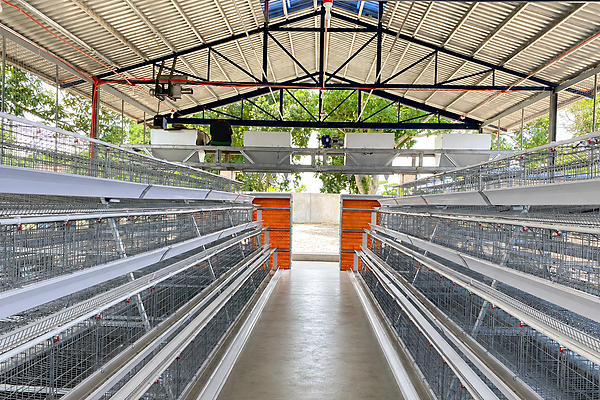
1. Why Does a Complete Automatic Layer Cage Quotation Matter?
Two suppliers may offer quotations for the same number of laying hens, but the prices can differ substantially. The difference is not necessarily the quality of the cages. It may be the equipment included in each offer. For example, one quotation may include H-type cage frames and nipple drinkers only. Another may include feeding machines, manure belts, egg collection conveyors, fans, lighting, controllers, and installation guidance. Both suppliers may describe their products as automatic poultry cage equipment, even though the purchasing scope is different. Before evaluating the total price, confirm that the proposed system actually meets your farm’s operating requirements. A lower initial quotation can become more expensive if essential equipment must be purchased separately.2. What Cage Specifications Must Be Included?
The quotation should begin with the layer cage model and its actual installed capacity. Buyers should not accept a description such as “automatic chicken cages for 30,000 birds” without knowing the cage dimensions, number of tiers, number of sets, and bird capacity per set.| Required Specification | What the Quotation Should State |
|---|---|
| Cage Type | A-type or H-type layer cage system |
| Number of Tiers | 3-tier, 4-tier or another confirmed model |
| Cage Dimensions | Actual cage unit dimensions in millimeters |
| Bird Capacity | Rated birds per cage set and total installed capacity |
| Cage Quantity | Total sets, rows and sets per row |
| Materials | Steel specifications, surface treatment and relevant components |
| Accessories | Doors, troughs, fittings, supports and accessories included |
Example: Calculating H-Type Layer Cage Quantities
For a 30,000-layer farm, a 4-tier H-type cage model with a rated capacity of 192 birds per set requires at least 157 sets mathematically: 30,000 ÷ 192 = 156.25, rounded up to 157 cage sets. A preliminary four-row layout could use 40 sets per row, giving 160 sets and 30,720 installed bird positions. This is a planning example rather than a final layout. The supplier must confirm the actual cage model, stocking requirements, usable building dimensions and row configuration. If another supplier uses a model with 144 birds per set, the number of sets will be different. Comparing only the unit price per cage set would therefore be misleading.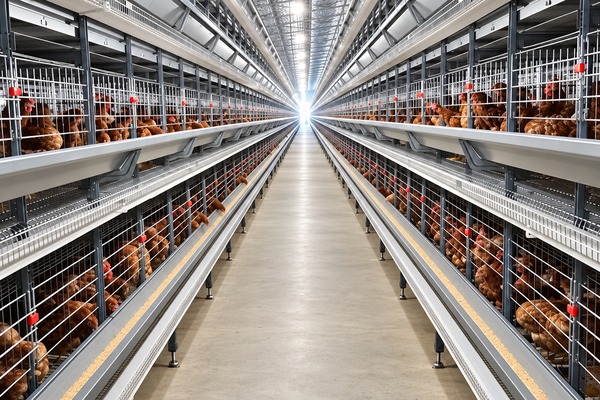
3. What Automatic Equipment Should Be Listed in the Quotation?
A complete commercial layer cage equipment quotation should provide a clear scope of supply. The quotation must distinguish between the core equipment supplied, project-dependent systems and optional accessories.| Equipment | Components to Check | Buyer Requirement |
|---|---|---|
| Layer Cage System | Cage frames, doors, wire mesh, troughs, supports and fittings | Confirm quantity and specifications |
| Automatic Feeding | Feeding machines, feed transport, motors and controls | Confirm silos and conveyors separately |
| Nipple Drinking | Nipples, water lines, regulators, filters and fittings | Confirm water treatment and supply scope |
| Manure Removal | Manure belts, motors, rollers and discharge equipment | Confirm cross and external conveyors |
| Egg Collection | Egg belts, collection equipment and elevators as required | Confirm central collection system |
| Ventilation | Exhaust fans, air inlets and supporting equipment | Confirm against climate and house design |
| Cooling | Cooling pads, pumps and water distribution where required | Confirm whether included or optional |
| Lighting and Controls | Lighting devices, controllers, sensors and cabinets | Confirm functions and electrical requirements |
Automatic Feeding and Drinking
Feeding equipment should be described beyond the words “automatic feeding system.” Buyers should confirm whether the quotation includes a feed silo, main feed conveyor, feeding machines for each cage row, motors, cables and control devices. The drinking system should identify nipple drinkers, pipelines, pressure regulators and water filtration equipment. Water tanks, pumps and additional water treatment may not be part of the standard cage package, so the quotation should clarify responsibility for these components.Automatic Manure Removal
For an H-type cage system, manure belts are commonly fitted beneath the cage tiers. However, moving manure along a cage row and transferring it completely outside the poultry house are different functions. Check whether the price includes the manure belt drives, cross conveyor, inclined conveyor and discharge equipment. Also identify where manure will be collected after leaving the building.Automatic Egg Collection
Automatic egg collection can include egg belts along the cage rows, row-end elevators and central egg conveyors. A supplier may include the cage-row collection equipment but exclude a central collection line or egg room equipment. Ask the supplier to identify the exact endpoint of the egg collection system. This makes it easier to plan the egg handling area and understand which manual tasks remain.Buyer Checkpoint: What Does “Fully Automatic” Actually Mean?
Do not assume that the term “fully automatic” guarantees every possible farm function. Request the exact equipment list and confirm feeding, drinking, manure removal, egg collection, ventilation, lighting and controls individually. The quotation should also identify any functions that still require manual operation.4. Should the Quotation Include Poultry House Layout Drawings?
For commercial poultry projects, a preliminary equipment layout is an important part of a reliable quotation. It helps verify that the quoted cages and automatic equipment can actually fit inside the proposed poultry house. The drawing should identify the cage row arrangement, approximate row lengths, working aisles, manure discharge positions, egg collection routes and equipment service areas. Where environmental control is part of the package, fan and cooling equipment locations should be coordinated with the house design.- Number of poultry houses and capacity per house
- Number of cage rows and sets per row
- Required operating and maintenance aisles
- Feeding and drinking equipment positions
- Egg collection and manure removal routes
- Ventilation equipment and electrical control locations
- Any building requirements affecting equipment installation

5. What Costs Are Often Excluded from a Poultry Equipment Quotation?
One of the most common purchasing mistakes is assuming that a quoted equipment price represents the total investment required to start egg production. Equipment prices and complete poultry farm investment are not the same. The quotation should identify which costs are included, which are optional and which remain the buyer’s responsibility.| Possible Extra Cost | Question to Ask |
|---|---|
| Poultry House Construction | Are building works, foundations and steel structure included? |
| International Freight | What delivery term and destination are quoted? |
| Customs and Import Charges | Who pays duties, local taxes and destination charges? |
| Electrical Installation | Who supplies the main wiring, distribution and connection work? |
| Backup Power | Are generator and emergency power systems included? |
| Installation | Does the quote include technicians, labor, tools and commissioning? |
| Spare Parts | Which recommended spares are supplied, and in what quantity? |
| Farm Operating Costs | Are pullets, feed, staffing and working capital outside the quote? |
6. What Commercial Terms Should Be Included?
A technically complete equipment list still needs clear commercial terms. The buyer should know the quotation currency, delivery conditions, payment schedule, production lead time and warranty obligations before confirming an order.EXW, FOB and CIF: Why Does the Delivery Term Matter?
| Trade Term | General Meaning | Buyer Checkpoint |
|---|---|---|
| EXW | Goods made available at a named seller location | Buyer arranges much of the onward logistics under the agreed term |
| FOB | Seller delivers goods on board at the named port of shipment | Confirm ocean freight, insurance and destination costs separately |
| CIF | Seller arranges freight and insurance to the named destination port | Import clearance, duties and destination charges may remain separate |
Other Commercial Details
- Quotation number, issue date and validity period
- Seller and buyer company details
- Product descriptions, quantities, unit prices and total price
- Quotation currency and agreed payment terms
- Production lead time and estimated shipment schedule
- Packing specifications and shipping arrangements
- Warranty coverage, start date and exclusions
- Installation, commissioning and training responsibilities
- Technical documentation and spare parts supply
7. Example: Scope of Supply for a 30,000-Layer Automatic Farm
Consider a buyer planning a new 30,000-layer poultry farm. For this scale, LIVI generally recommends a 4-tier H-type layer cage system in one poultry house, with automatic feeding, drinking, manure removal, egg collection and appropriate environmental controls. Using a 192-bird H-type cage model, one preliminary arrangement could use 160 cage sets in four rows, providing 30,720 installed bird positions. This configuration is only a planning example and must be verified against the actual cage model, space requirements and final house layout.| Quotation Line | Example Scope | Details to Finalize |
|---|---|---|
| 01 – H-Type Cages | 160 sets, 4-tier, 192 birds/set | Materials, accessories, row arrangement |
| 02 – Feeding | Automatic feeding for 4 rows | Silo size, conveying equipment |
| 03 – Drinking | Complete cage nipple drinking lines | Water source, filtration and regulators |
| 04 – Manure Removal | Manure belts and discharge arrangement | External discharge location |
| 05 – Egg Collection | Egg collection for the configured rows | Central collection and egg room requirements |
| 06 – Environment | Ventilation, lighting and agreed controls | Climate and building specifications |
| 07 – Project Support | Layout, equipment documentation and installation guidance | Services included and excluded |

8. How Can Buyers Compare Two Automatic Cage Quotations?
The most reliable comparison is a line-by-line comparison using the same project requirements. Ask both suppliers to quote the same flock capacity, cage system type, automation level and destination. Start with the installed bird capacity and cage model. Then compare feeding, drinking, manure removal, egg collection, ventilation, electrical equipment, spare parts and support. Finally, compare the delivery terms, installation responsibilities and exclusions. A quotation with a higher total price may include systems that are absent from a lower quotation. The purpose is not to choose the most expensive supplier, but to identify the actual equipment and services received for the quoted amount. For a separate guide focused on evaluating different suppliers, read How to Compare Poultry Equipment Suppliers Before Buying?9. Automatic Layer Cage Quotation Checklist
Before paying a deposit or signing a supply contract, confirm the following items in writing.- ☐ Bird type, target capacity and number of poultry houses are correct.
- ☐ Cage type, tiers, dimensions and materials are specified.
- ☐ Cage sets, rows and installed bird capacity are calculated.
- ☐ Automatic feeding components and feed silo scope are defined.
- ☐ Nipple drinking equipment and water supply responsibilities are clear.
- ☐ Manure belts and external discharge equipment are identified.
- ☐ Egg collection scope and central collection equipment are confirmed.
- ☐ Ventilation, cooling, lighting and controllers are itemized.
- ☐ A compatible preliminary poultry house layout is available.
- ☐ Spare parts, drawings and technical support are listed.
- ☐ Installation, commissioning and training responsibilities are defined.
- ☐ Unit prices, total price, currency and payment terms are clear.
- ☐ EXW, FOB, CIF or other agreed delivery terms are stated correctly.
- ☐ Production lead time, warranty and quotation validity are confirmed.
- ☐ Exclusions and project costs outside the quotation are listed.
10. What Information Should You Send to Get an Accurate Quotation?
Suppliers can prepare more useful quotations when the buyer shares basic project conditions. You do not need every construction detail at the first enquiry, but the following information will improve the equipment proposal.- Bird type: Commercial laying hens
- Capacity: Planned number of birds
- Country and location: Project destination
- Poultry house: Length, width and height if already built
- Available land: Site dimensions if construction has not started
- Automation: Feeding, drinking, manure removal, egg collection and environmental control requirements
- Utilities: Available electricity, voltage, backup power and water source
- Delivery: Destination city or preferred port
- Timeline: Expected equipment purchase and construction schedule
11. Frequently Asked Questions
What should be included in a complete automatic layer cage quotation?
It should include cage specifications, cage quantities, feeding, drinking, manure removal, egg collection, controls, and an itemized statement of any ventilation, cooling, lighting and supporting equipment. It should also clarify layout support, shipping, installation, warranty and exclusions.Does an automatic cage quotation always include feed silos?
No. Some quotations include automatic cage-row feeders but exclude external feed silos or main feed conveyors. Confirm these components separately.Is automatic egg collection included in every H-type cage price?
Not necessarily. H-type cages can be supplied with different levels of automation. Check whether egg belts, row elevators and central egg collection are included in the quoted price.Should the quotation include a poultry house layout?
For commercial farms, a preliminary equipment layout is strongly recommended. It helps verify the cage arrangement, aisle space, automation routes and service requirements before installation.Is shipping included in an automatic poultry cage price?
It depends on the quoted delivery term. EXW, FOB and CIF offers have different cost and responsibility allocations. Check the exact named location, freight arrangements and destination charges.Can LIVI provide a quotation before the poultry house is built?
Yes. LIVI can prepare a preliminary equipment solution based on the planned bird capacity, land dimensions, country and automation requirements. A final quotation should reflect the confirmed cage arrangement and equipment scope.Conclusion: Ask for the Complete Equipment Scope, Not Just a Cage Price
An automatic layer cage system quotation should make the project easier to understand, not leave the buyer guessing what will be supplied. Cage specifications, installed bird capacity, automatic equipment, layout drawings, commercial terms and exclusions should all be clear. When these details are documented, buyers can compare suppliers on a consistent basis, plan the poultry house more accurately and reduce the risk of unexpected equipment purchases after placing an order.COMMERCIAL LAYER FARM EQUIPMENT SOLUTIONS
Request a Complete Automatic Layer Cage Quotation from LIVI
Planning a commercial layer farm for 10,000 birds or more? Share your project requirements with LIVI to discuss suitable cage configurations, automatic systems, a preliminary poultry house layout and an itemized equipment quotation.- Planned layer capacity
- Project country and destination
- Available poultry house or land dimensions
- Preferred automatic equipment
- Expected purchasing schedule