Uganda 50,000 Layers Buying Guide
Layer Cages for Sale in Uganda: How to Choose the Right Cage System for 50,000 Layers
For a 50,000-layer poultry farm in Uganda, the recommended solution is a fully automatic H-type layer cage system with automatic feeding, drinking, manure removal, egg collection, ventilation, cooling pad, lighting, and environment control.
Farmers searching for layer cages for sale in Uganda should not compare cage price only. For 50,000 layers, the key decision is whether the cage system can match the chicken house layout, labor plan, ventilation design, egg collection method, and future expansion target. Livi Machinery recommends the Livi H-Type Cage System for this capacity because it is more suitable for land saving and commercial egg production.
Uganda
50,000 laying hens
4-tier 4-door H-type layer cage
Feeding, drinking, manure, egg collection, ventilation
What Should Ugandan Farmers Check Before Buying Layer Cages?
Before buying layer cages in Uganda, the farmer should confirm the target bird capacity, existing or planned chicken house size, land area, labor plan, power supply, water source, manure handling method, and future expansion target. For 50,000 layers, these factors affect the cage model, cage rows, feeding system length, manure belt direction, egg collection line, fan quantity, and cooling pad area.
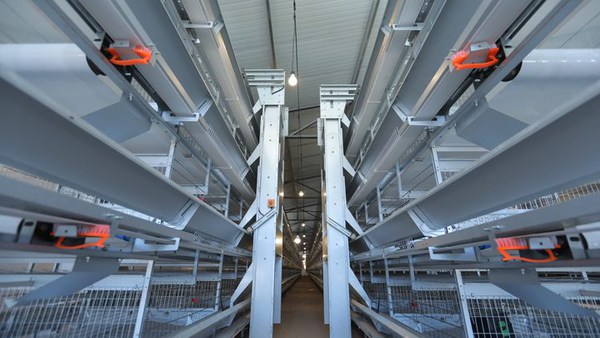
A reliable 50,000 layers cage system Uganda quotation should include cage quantity calculation, equipment configuration, poultry house layout, ventilation planning, installation guidance, and spare parts, not only cage body price.
Capacity Data
Confirm whether the project is exactly 50,000 layers or should reserve space for 60,000–80,000 layers later.
House Data
Confirm house length, width, height, walkway plan, door position, feed room, egg room, and manure outlet.
Management Data
Confirm labor cost, egg collection method, daily manure cleaning plan, power stability, and water treatment needs.
How Many H-Type Cage Sets Are Needed for 50,000 Layers?
Cage quantity should be calculated before discussing price. For a 50,000-layer farm in Uganda, Livi Machinery recommends the 4-tier 4-door H-type layer cage with 192 birds per set.
Formula: Total Birds ÷ Birds Per Set = Required Cage Sets
Calculation: 50,000 layers ÷ 192 birds/set ≈ 261 cage sets
Why Is a 4-Tier H-Type Layer Cage the Right Choice for 50,000 Layers in Uganda?
For a 50,000-layer poultry farm in Uganda, the recommended cage type is the 4-tier H-type layer cage system. At this capacity, the farm already belongs to commercial egg production, so the cage system must support high stocking density, automatic feeding, automatic drinking, manure removal, egg collection, and stable ventilation control.
Compared with a low-density cage layout, the Livi H-Type Cage System makes better use of the chicken house height and reduces the land area required for the same number of birds. This is important for Ugandan investors who want to control construction cost, improve house utilization, and reserve land for future expansion.
For this project, Livi Machinery recommends the 4-tier 4-door H-type layer cage. Each set has a specification of 1800mm × 600mm × 430mm and can hold 192 birds per set. This model is suitable for 30,000–300,000+ layer farms and is more practical for a 50,000-layer farm than lower-density cage systems.
Calculation: 50,000 layers ÷ 192 birds/set ≈ 261 sets. The final cage quantity can be adjusted according to chicken house length, cage row arrangement, walkway width, egg collection direction, and reserved capacity.
In this Uganda project, the 4-tier H-type cage should be designed together with automatic feeding, nipple drinking, belt manure removal, the Livi Automatic Egg Collection System, ventilation fans, cooling pads, and an intelligent control cabinet. This allows the farm to reduce labor pressure, improve daily management efficiency, and maintain a cleaner environment for stable egg production.
What Should Be Included in a Complete Layer Cage Quotation?
A complete quotation for 50,000 layers should not only include cage frames. It should show the whole poultry equipment configuration, including feeding, drinking, manure removal, egg collection, ventilation, cooling, lighting, control system, spare parts, packing, and installation guidance.
When comparing H type layer cage Uganda quotations, buyers should check whether each supplier is quoting the same equipment scope. A lower price may exclude egg collection, manure conveyor, cooling pad, control cabinet, or installation support.
Should Ugandan Farmers Buy Local Cage Listings or a Manufacturer Cage System?
Local cage listings may be useful for very small farms that need a quick purchase. However, a 50,000-layer project is not only a cage purchase. It is a complete poultry production system that requires cage layout, automatic equipment matching, ventilation calculation, egg collection planning, manure handling, and installation support.
For a 50,000-layer project, the safer choice is a manufacturer-supported system because the equipment must match house structure, egg collection direction, manure outlet, and ventilation plan.
How Should the Chicken House Layout Be Planned for 50,000 Layers?
For a 50,000-layer farm in Uganda, a two-house layout is usually easier to manage than putting all birds in one building. Each house can hold about 25,000 layers. This layout improves ventilation control, biosecurity separation, manure handling, and daily inspection.
If the chicken house has not been built yet, the cage layout should be designed before civil construction. The Livi Poultry Farm Layout Solution can help confirm cage rows, walkways, feed tower position, egg room, manure outlet, fan location, cooling pad area, and service road.
How Should Ventilation Be Designed for Uganda Climate?
Uganda layer farms need stable airflow, heat control, humidity control, and air quality management. A 50,000-layer H-type cage house must remove heat, ammonia, moisture, dust, and carbon dioxide while distributing fresh air evenly through each cage row.
The Livi Ventilation Design Standard usually includes exhaust fans, side-wall air inlets, cooling pads, lighting control, temperature sensors, humidity sensors, and an intelligent control cabinet. For H-type layer cage houses, mechanical ventilation and cooling pads are strongly recommended.
What should be monitored?
Temperature, humidity, air speed, ammonia, dust, carbon dioxide, lighting time, and bird behavior should be checked daily.
What equipment is needed?
Fans, cooling pads, air inlets, sensors, lighting system, and environment control cabinet should be designed together.
What is the goal?
Reduce heat stress, protect laying performance, keep manure drier, and maintain stable egg production.
How Much Do Layer Cages Cost for 50,000 Layers in Uganda?
The cost of layer cages for 50,000 layers in Uganda depends on cage model, automation level, chicken house layout, ventilation configuration, shipping destination, spare parts, installation guidance, and whether the project uses one house or two houses.
A practical layer cage price Uganda estimate should be divided into equipment modules. This makes it easier to compare suppliers and avoid missing systems.
What Is the Daily Operation SOP After Installing the Cage System?
A fully automatic cage system reduces repetitive labor, but it still needs daily inspection. Workers should check birds, feed, water, manure belts, egg belts, ventilation, alarms, and production records every day.
FAQ About Layer Cages for Sale in Uganda for 50,000 Layers
Which layer cage is suitable for 50,000 layers in Uganda?
For 50,000 layers, H-type layer cages are usually more suitable than A-type cages. H-type cages save land, support higher stocking density, and connect better with automatic feeding, manure removal, egg collection, and ventilation systems. A-type cages are more economical for 5,000–30,000 layers, but a 50,000-layer farm needs a more intensive and automated cage system for stable commercial egg production.
How many cage sets are needed for 50,000 layers?
If using the 4-tier 4-door H-type layer cage with 192 birds per set, about 261 cage sets are needed. The calculation is 50,000 layers divided by 192 birds per set. The final cage quantity may be adjusted according to house length, row arrangement, walkway width, spare capacity, egg collection direction, and installation conditions.
Does the layer cage price include automatic equipment?
Not always. Some quotations only include cage bodies and drinking lines. A complete 50,000-layer solution should include automatic feeding, drinking, manure removal, egg collection, ventilation, cooling pads, control cabinet, spare parts, packing, and installation guidance. Buyers should compare quotations by the same equipment scope, because a cheaper quotation may exclude important systems needed for daily operation.
Can layer cages be installed in an existing chicken house?
Yes, but the existing house must be measured first. The supplier needs the house length, width, height, column position, door position, floor condition, ventilation openings, power supply, water source, and manure outlet. If the house is too narrow or has poor ventilation, the cage rows and automation layout may need adjustment. A layout drawing should be prepared before equipment production.
What information is needed before getting a quotation?
To prepare an accurate quotation, Livi Machinery needs the target capacity, number of chicken houses, house dimensions, preferred cage model, automation requirements, power supply, water source, local climate condition, manure handling plan, destination city, and expansion target. With this information, a customized poultry battery cages Uganda layout can be designed more accurately.
Need a 50,000-Layer Cage System Layout for Uganda?
If you are planning to buy layer cages for a 50,000-layer poultry farm in Uganda, Livi Machinery can provide cage model selection, cage quantity calculation, H-type cage layout, automatic feeding and drinking configuration, manure removal design, egg collection planning, ventilation design, shipping support, and installation guidance according to your land size, house dimensions, climate, and investment plan.
Free Chicken Cage System Quotation