Uganda’s poultry sector has become one of the fastest-growing agricultural industries in East Africa. As the population increases and urban areas expand, the demand for eggs continues to rise in major cities such as Kampala and Gulu.
Eggs are widely consumed because they are affordable, nutritious, and easy to transport. According to the Food and Agriculture Organization, poultry farming is one of the most accessible agricultural businesses for small and medium investors in developing countries.
For farmers planning to raise 10,000–30,000 laying hens, choosing the right production system is essential. Many modern farms are now investing in layer chicken cages for sale in Uganda to increase efficiency, reduce labor costs, and improve egg production.
This guide explains how to start a commercial egg farm using layer cages, including farm planning, equipment investment, and a real poultry project case.

Step 1: Understand Why Layer Cage Farming Is More Profitable
Before starting a poultry farm, farmers must choose between two main housing systems:
- Deep litter system
- Layer cage system
Traditional deep litter systems are simple but have limitations when farm size increases.
A layer cage system provides several advantages:
Higher Egg Production
Each hen receives consistent access to feed and water, which improves laying performance.
Reduced Feed Waste
Feed is distributed directly into troughs, minimizing losses and improving feed conversion rates.
Cleaner Eggs
Eggs roll automatically to the front of the cage, reducing contamination and breakage.
Easier Farm Management
Large farms can manage thousands of chickens more efficiently.
These advantages explain why many commercial farms in Uganda are gradually transitioning to cage systems.
Step 2: Determine the Right Farm Size
The profitability of a poultry farm often depends on production scale.
Typical commercial farm sizes include:
| Farm Scale | Number of Layers |
|---|---|
| Small commercial farm | 5,000 chickens |
| Medium commercial farm | 10,000–20,000 chickens |
| Large commercial farm | 30,000+ chickens |
Most investors starting their first project in Uganda choose 10,000–20,000 layers, which provides a good balance between investment and production capacity.
Step 3: Design the Poultry House Properly
A well-designed poultry house improves ventilation, productivity, and bird health.
A typical poultry house for 10,000 layers may include:
Length: 70–80 meters
Width: 7–8 meters
Height: 3.5–4 meters
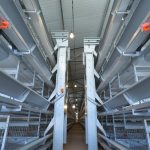
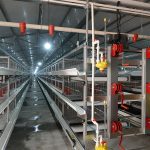
Inside the house, cages are arranged in two rows with a central walkway for management and egg collection.
Proper ventilation systems, fans, and lighting should also be installed to maintain a healthy environment for the birds.

Step 4: Choose the Right Layer Chicken Cage System
Farmers in Uganda generally choose between two types of cage systems.
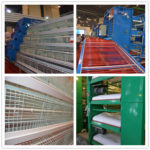
A-Type Layer Cage
This is the most common option for small and medium farms.
Key features include:
- 3–4 tiers
- 120–160 chickens per cage set
- Simple installation
- Lower investment cost
This system is ideal for farms raising 5,000–20,000 birds.
H-Type Automatic Cage System
Large-scale farms may prefer automated H-type cages.
Advantages include:
- Higher density farming
- Automatic feeding systems
- Automatic egg collection
- Automatic manure removal
These systems are suitable for farms raising 30,000 or more chickens.
Many poultry equipment manufacturers, including LIVI Poultry Equipment, provide customized cage systems depending on farm scale.
Step 5: Understand the Investment Cost
The total cost of layer chicken cages for sale in Uganda varies depending on farm size and equipment configuration.
Typical equipment investment ranges are:
| Farm Size | Cage Equipment Cost |
|---|---|
| 5,000 layers | $5,000 – $10,000 |
| 10,000 layers | $10,000 – $20,000 |
| 20,000 layers | $20,000 – $40,000 |
| 30,000 layers | $30,000 – $50,000 |
These prices generally include:
- Layer cages
- Feeding systems
- Drinking systems
However, poultry house construction, chicks, and feed costs are separate investments.
Step 6: Equipment Transportation and Delivery
Most poultry farming equipment imported into Uganda arrives through the Port of Mombasa.
The delivery process usually includes:
- Cage production (10–15 days)
- Sea transportation (25–35 days)
- Truck transport from Mombasa to Uganda
Experienced suppliers often assist farmers with shipping arrangements and customs clearance.

Real Poultry Farm Case: 20,000 Layers Project in Uganda
To better understand how layer cages in Uganda are used in practice, here is a real poultry farm example.
Project Overview
Location: Lira
Farm size: 20,000 laying hens
Poultry House Layout
The farmer built two poultry houses.
Each house had the following dimensions:
Length: 78 meters
Width: 8 meters
Height: 4 meters
Each house contained:
- Two rows of A-type cages
- 40 cage sets per row
- Capacity of 10,000 chickens per building

Equipment Installed
The farm installed the following systems:
- 4-tier layer chicken cages
- Automatic nipple drinking system
- Feeding trough system
- Manure cleaning system
- Ventilation fans
Installation Timeline
Installation of the entire cage system took about 18 days.
After installation, the farmer introduced pullets at 18 weeks of age and began egg production shortly afterward.
Tips for Choosing Reliable Layer Chicken Cages
When purchasing poultry cages, farmers should focus on several key factors.
Cage Material
High-quality cages are made from hot-dip galvanized steel, which can last 15–20 years.
Cage Design
Good cage design improves:
- Egg collection efficiency
- Ventilation
- Bird comfort
Supplier Support
Reliable suppliers should provide:
- Poultry house design drawings
- Installation guidance
- Technical support
This support is particularly valuable for farmers starting their first poultry project.
FAQ: Layer Chicken Cages in Uganda
How many chickens fit in one cage?
Most cage compartments hold 3–5 chickens, depending on cage size.
Are layer cages suitable for beginner farmers?
Yes. Many new poultry farmers start with 5,000–10,000 birds using A-type cages.
How long do layer cages last?
High-quality cages can last 15–20 years with proper maintenance.
How long does cage installation take?
For a 10,000–20,000 layer farm, installation typically takes 15–25 days.
Is cage farming profitable in Uganda?
Yes. With proper management and stable egg demand, commercial layer farming can provide consistent income.
Conclusion
Egg consumption in Uganda continues to grow, creating strong opportunities for poultry farmers and agricultural investors. Modern cage systems allow farms to produce more eggs efficiently while reducing labor and improving farm management.
Investing in reliable layer chicken cages for sale in Uganda is a key step toward building a profitable commercial egg farm.
Suppliers such as LIVI Poultry Equipment offer complete poultry farming solutions including cage manufacturing, farm layout design, and installation guidance, helping farmers build efficient and sustainable egg production operations.