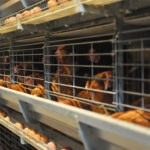
Zambia Layer Cage Buying Guide
Chicken Layer Cages for Sale in Zambia: How to Choose the Right Poultry Cage System
For farmers looking for chicken layer cages for sale in Zambia, the recommended solution depends on farm capacity. A-type layer cages are suitable for 10,000–30,000 layers, while H-type layer cages are recommended for 30,000–300,000+ layers with higher automation requirements.
Livi Machinery provides both the Livi A-Type Layer Cage and the Livi H-Type Cage System, with optional automatic feeding, automatic drinking, manure removal, egg collection, ventilation, cooling pad, and environment control for commercial egg production farms in Zambia.
Zambia
Layer chicken egg production farm
A-type layer cage or H-type layer cage
Feeding, drinking, manure removal, egg collection, ventilation
Why Do Chicken Layer Cages for Sale in Zambia Need Capacity-Based Selection?
Chicken layer cages should not be selected only by price. In Zambia, the right cage system depends on bird quantity, chicken house size, land condition, labor cost, ventilation demand, automation level, and future expansion plan.
A small farm may only need A-type cages with automatic drinking. A large commercial farm should consider H-type cages with feeding, manure removal, egg collection, and environment control. This is why a reliable chicken layer cages for sale in Zambia quotation should start with farm capacity and layout design.
Which Is Better for Zambia: A-Type or H-Type Layer Cage?
A-type cages are more economical and easier to install for small and medium farms. H-type cages provide higher stocking density and stronger automation compatibility for large farms. The best choice depends on land size, target capacity, labor cost, and long-term production plan.
For farmers comparing A type layer cage Zambia and H-type cage systems, Livi Machinery can calculate both options based on the same capacity and house size.
How Many Layer Cage Sets Are Needed?
The number of layer cage sets is calculated by dividing the total bird capacity by the number of birds per cage set. This calculation is the starting point for estimating cage quantity, house size, automation length, packing volume, and shipping cost.
Formula: Total Birds ÷ Birds Per Set = Required Cage Sets
What Automatic Equipment Should Be Included?
Layer cages for sale in Zambia can be supplied as a basic cage system, semi-automatic system, or fully automatic system. For commercial egg production, the cage system should include automatic drinking as a basic requirement. Feeding, manure removal, egg collection, and ventilation can be selected according to capacity and budget.
The Livi Poultry Farm Layout Solution connects cage rows, feeding routes, water lines, manure outlet, egg collection direction, fans, cooling pads, and electrical control into one complete farm design.
For buyers who need automatic poultry equipment Zambia, the quotation should list every system clearly instead of only showing cage body price.
How Should the Chicken House Layout Be Planned?
Chicken house layout affects the final cage price and installation plan. The layout decides cage rows, aisle width, feeding machine length, manure discharge direction, egg collection line length, fan quantity, cooling pad area, and control cabinet position.
If the buyer has not built the chicken house yet, Livi Machinery recommends designing the cage layout before civil construction. This reduces the risk of building a house that is too narrow, too short, or difficult for equipment installation.
How Should Ventilation Be Designed for Zambia Layer Farms?
Ventilation design should match Zambia’s farming conditions, chicken house size, cage density, and local temperature changes. A layer cage house must remove heat, humidity, ammonia, dust, and carbon dioxide while keeping fresh air moving evenly through each cage row.
The Livi Ventilation Design Standard usually includes exhaust fans, side-wall air inlets, cooling pads, lighting control, temperature sensors, humidity sensors, and an intelligent control cabinet. For H-type cage houses, mechanical ventilation and cooling pads are strongly recommended.
What should be controlled?
Temperature, humidity, air speed, ammonia, lighting time, dust level, and bird behavior should be checked daily.
What equipment is useful?
Fans, cooling pads, air inlets, sensors, lighting system, and environment control cabinet should be planned together.
What is the goal?
Reduce heat stress, protect laying performance, keep manure drier, and maintain stable egg production.
How Much Do Layer Cages Cost in Zambia?
The layer cage cost in Zambia depends on cage model, capacity, automation level, house dimensions, ventilation configuration, shipping destination, spare parts, and installation guidance. A fixed price is not accurate unless the equipment scope is clearly confirmed.
When comparing quotations, buyers should check whether the offer includes only cages or a complete system with drinking, feeding, manure removal, egg collection, ventilation, cooling, packing, and after-sales support.
For a more accurate layer battery cage price Zambia, buyers should provide farm capacity, house size, cage model preference, automation requirements, and destination location.
What Is the Daily Operation SOP After Installing Layer Cages?
Layer cages reduce labor intensity, but daily management remains important. Workers should check birds, feed, water, manure, egg collection, ventilation, lighting, and production records every day.
FAQ About Chicken Layer Cages for Sale in Zambia
Which layer cage is suitable for a small farm in Zambia?
For small and medium farms, the Livi A-Type Layer Cage is usually suitable because it has a lower initial investment, simple structure, good ventilation, and easier installation. It is commonly recommended for 5,000–30,000 layers. Farmers can start with automatic drinking and later add feeding, manure removal, or egg collection according to labor cost and production target.
When should a farmer choose H-type layer cages?
H-type layer cages are recommended when the farm capacity reaches 30,000 layers or more, especially when land saving, labor saving, and full automation are important. The Livi H-Type Cage System works well with automatic feeding, automatic manure removal, automatic egg collection, and environment control, making it suitable for commercial egg production farms.
How many cages are needed for 10,000 layers?
If using the 4-tier 5-door A-type layer cage with 160 birds per set, a 10,000-layer farm needs about 63 cage sets. The formula is 10,000 birds divided by 160 birds per set. The final number may be adjusted according to chicken house length, row arrangement, aisle width, and reserved capacity.
Does the cage price include automatic feeding and egg collection?
Not always. Some quotations only include cage bodies and drinking lines. A complete automatic solution may include feeding system, manure removal system, Livi Automatic Egg Collection System, ventilation fans, cooling pads, control cabinet, spare parts, packing, and installation guidance. Buyers should compare quotations by the same equipment scope, not only by the lowest cage price.
What information is needed before getting a quotation?
To prepare an accurate quotation, Livi Machinery needs the target bird capacity, number of houses, house length and width, preferred cage type, automation requirements, power supply, water source, local climate condition, nearest destination city or port, and future expansion plan. With this information, a customized poultry farm cage layout Zambia can be designed more accurately.
Need Chicken Layer Cages for Your Poultry Farm in Zambia?
If you are planning to build a 10,000–100,000+ layer poultry farm in Zambia, Livi Machinery can provide cage model selection, cage quantity calculation, poultry house layout, automatic feeding and drinking configuration, manure removal design, egg collection planning, ventilation design, shipping support, and installation guidance according to your capacity, land size, climate, and investment plan.