Poultry Equipment Buyer Guide
How to Find a Reliable Poultry Equipment Supplier for Your Chicken Farm
A reliable poultry equipment supplier should do more than sell chicken cages. The supplier should be able to calculate cage quantity, recommend the correct cage model, design the poultry house layout, integrate feeding, drinking, manure removal, egg collection and ventilation, and provide clear installation and spare parts support.
For buyers building a commercial layer, pullet or broiler farm, the safest approach is to evaluate the supplier as a complete poultry farm solution provider rather than comparing cage prices alone.
Can the supplier design for your actual farm?
Is the quotation complete and transparent?
Automation and ventilation integration are essential.
Compare system value, not cage price only.
What Should a Reliable Poultry Equipment Supplier Ask Before Quoting?
A reliable supplier should first understand the farm. Before giving a final quotation, the supplier should ask about bird type, total capacity, chicken house dimensions, country, local climate, power supply, water source, automation requirements, manure handling and future expansion.
If a supplier gives a final price without asking for these details, the quotation may only represent a basic cage package. A professional reliable poultry equipment supplier should first convert the farm requirements into equipment specifications.
| Information | Why the Supplier Needs It | What It Affects |
|---|---|---|
| Bird type | Layer, pullet or broiler require different equipment | Cage model and feeding system |
| Farm capacity | Determines total equipment quantity | Cage sets and automation level |
| House dimensions | Determines row arrangement and line length | Cage layout, aisles and equipment routes |
| Climate | Hot and humid regions require stronger environmental control | Fans, cooling pads and air inlets |
| Future expansion | Avoids redesigning the whole farm later | Land use, roads, feed and egg routes |
Can the Supplier Recommend the Right Cage System for Your Farm?
The same cage system should not be recommended for every poultry farm. Cage choice should match bird type, capacity, house size and automation target.
For layer farms, Livi Machinery typically recommends the Livi A-Type Layer Cage for 10,000–30,000 layers and the Livi H-Type Cage System for 30,000–300,000+ layers.
Can the Supplier Calculate Cage Quantity and Farm Capacity Clearly?
Buyers should ask the supplier to show how cage quantity is calculated. This makes it easier to verify the quotation and check whether the proposed system can really hold the target number of birds.
Formula: Total Birds ÷ Birds Per Set = Required Cage Sets
| Farm Capacity | Recommended Cage | Birds Per Set | Estimated Cage Sets |
|---|---|---|---|
| 10,000 layers | A-type | 160 | About 63 sets |
| 20,000 layers | A-type | 160 | 125 sets |
| 30,000 layers | H-type | 192 | About 157 sets |
| 50,000 layers | H-type | 192 | About 261 sets |
| 100,000 layers | H-type | 192 | About 521 sets |
Can the Supplier Integrate All Automatic Poultry Equipment?
For commercial farms, the equipment supplier should be able to coordinate the cage system with feeding, drinking, manure removal, egg collection and environmental control.
A strong system supplier should explain where feed enters, how water is regulated, where manure exits, how eggs reach the collection area and how airflow moves through each cage row.
| Automatic System | Main Components | What the Supplier Should Confirm |
|---|---|---|
| Feeding | Silo, conveyor, feeding machine | Feed route and line length |
| Drinking | Nipple drinkers, filter, regulator | Water pressure and filtration |
| Manure removal | Belts, motors, cross conveyor | Manure outlet and discharge route |
| Egg collection | Egg belts, elevator, central line | Egg room position and collection route |
| Environment control | Fans, cooling pads, sensors, control cabinet | House size, cage density and climate |
Livi Machinery integrates these functions through the Livi H-Type Cage System, Livi Automatic Egg Collection System and related automatic poultry equipment.

Can the Supplier Design the Poultry House Before You Build It?
Poultry house dimensions should be matched with cage rows before civil construction is finalized. Building the house first and selecting equipment later can create problems with row spacing, manure outlets, egg collection routes and ventilation.
The Livi Poultry Farm Layout Solution combines cage rows, walkways, feeding route, drinking lines, manure discharge, egg collection, fans, cooling pads and control equipment into one layout.
Cage Rows
Determine how many cage lines can fit inside the house.
Service Aisles
Provide space for inspection, maintenance and movement.
Manure and Egg Routes
Prevent equipment conflicts after installation.
Ventilation Direction
Matches airflow with cage density and house length.
How Should Buyers Compare Poultry Equipment Quotations?
A quotation should be compared line by line. The cheapest total price is not necessarily the lowest-cost solution if major systems are missing.
| Quotation Item | What to Verify | Common Problem |
|---|---|---|
| Cage model | Dimensions and birds/set | Different capacities compared as equal products |
| Feeding system | Silo, conveyor and feeding machine | Feed silo may be excluded |
| Egg collection | Egg belts, elevator and central line | Only cage-level belts are included |
| Ventilation | Fans, cooling pads and controls | Quoted separately or omitted |
| Installation support | Drawings, manuals and technical guidance | Responsibility is unclear after shipment |
Before selecting a chicken farm equipment supplier, buyers should make sure every quotation is based on the same bird capacity and automation scope.
What Are the Warning Signs of an Unreliable Poultry Equipment Supplier?
Buyers can identify many supplier risks before placing an order. A professional supplier should be able to explain the system clearly and provide technical details that can be checked.
A final price cannot be accurate without capacity and layout data.
The buyer cannot confirm whether the system holds the required birds.
Equipment may not fit the existing or planned building.
Important equipment may appear as extra cost later.
The buyer may struggle to assemble and commission the system.
Routine maintenance becomes more difficult after operation starts.
What Installation and After-Sales Support Should a Supplier Provide?
A poultry equipment supplier should clearly define the support provided before, during and after installation. This is especially important for fully automatic H-type layer cage projects.
| Stage | Supplier Support | Buyer Benefit |
|---|---|---|
| Before installation | Layout and foundation drawings | Correct site preparation |
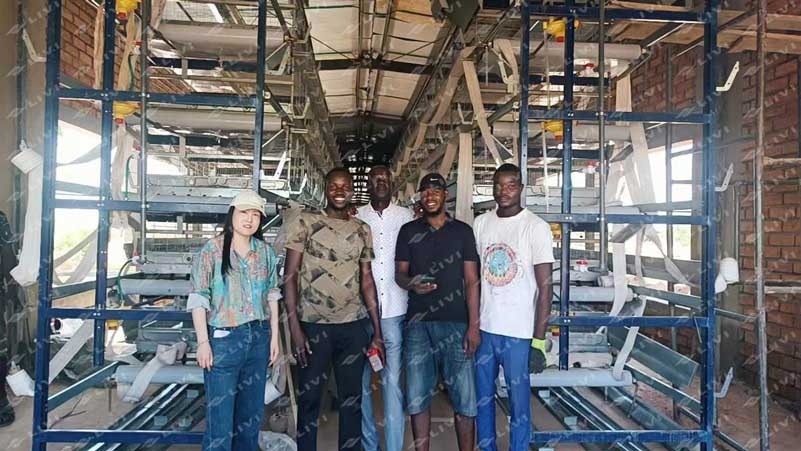
| During installation | Assembly and technical guidance | Reduces installation errors |
| Commissioning | System testing and adjustment | Confirms equipment operates correctly |
| Operation | Maintenance and spare parts guidance | Supports long-term equipment use |
FAQ About Finding a Reliable Poultry Equipment Supplier
Should I choose the poultry equipment supplier with the lowest price?
Not necessarily. A lower quotation may exclude automatic feeding, manure removal, egg collection, ventilation, spare parts or installation support. Buyers should first make sure the cage specification, cage quantity and automation scope are equal, then compare price. A complete but slightly higher quotation may reduce additional purchasing and redesign costs later.
How can I check whether a supplier understands large poultry farms?
Ask the supplier to design a specific project, such as a 50,000-layer farm. The supplier should be able to calculate cage sets, propose the number of houses, explain feeding, manure removal, egg collection and ventilation, and identify equipment routes. If the discussion stays only at cage dimensions and unit price, the supplier may not be providing complete farm design capability.
Is it better to buy cages and automation from the same supplier?
For automatic commercial farms, integrated supply can make coordination easier because cage rows, feeding machines, manure belts, egg belts, motors and ventilation all need compatible dimensions and layouts. The important point is not simply using one supplier, but making sure one complete technical design coordinates all systems before production.
What documents should a poultry equipment supplier provide?
Buyers should request equipment specifications, cage quantity, layout drawings, automation lists, installation requirements, electrical information, spare parts details and quotation scope. For large farms, the supplier should also explain manure discharge, egg collection, feed routes and ventilation so the buyer can verify whether the system matches the chicken house.
What information should I send before requesting a quotation?
Provide bird type, target capacity, number of chicken houses, house length and width, country, destination city or port, preferred automation level, power supply, water source, local climate, manure handling plan, egg collection requirement and future expansion target. These details allow the supplier to prepare a more accurate equipment configuration and farm layout.
Need to Evaluate a Poultry Equipment Supplier for Your Farm?
If you are planning a layer, pullet or broiler farm, Livi Machinery can provide cage model selection, cage quantity calculation, poultry house layout, automatic feeding and drinking configuration, manure removal design, egg collection planning, Livi Ventilation Design Standard, installation guidance and future expansion planning according to your farm capacity and investment plan.