

Commercial Layer Farm Management Guide
Battery Cages for Laying Hens: What Problems Do They Solve in Commercial Egg Farms?
Battery cages for laying hens are not only used to hold chickens. In a commercial egg farm, they solve key management problems such as limited land, high labor demand, uneven feeding, wet manure, difficult egg collection, poor ventilation, and unstable daily production records.
For small and medium farms, Livi Machinery recommends the Livi A-Type Layer Cage. For large commercial farms above 30,000 layers, the recommended solution is the Livi H-Type Cage System with automatic feeding, drinking, manure removal, egg collection, ventilation, cooling pad, and environment control.
How battery cages improve layer farm operation
Labor, manure, egg collection, space, ventilation
A-type or H-type layer cage by capacity
Commercial laying hen farms requiring stable egg production
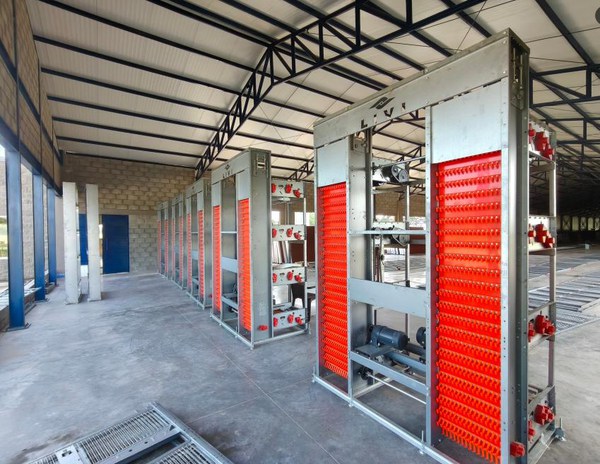
What Problems Do Battery Cages Solve for Laying Hen Farms?
Many layer farm problems are not caused by the hens themselves, but by poor layout and difficult daily management. When birds are kept on the floor or in a poorly designed cage house, workers may face wet manure, uneven feeding, dirty eggs, high labor pressure, poor airflow, and inaccurate production records.
A complete battery cages for laying hens system helps standardize feeding, drinking, manure removal, egg collection, and bird inspection. The value is not only the cage structure, but also the management system built around the cage.
How Do Battery Cages Reduce Labor in Layer Farms?
Labor saving is one of the main reasons farmers choose battery cages for laying hens. In a manual farm, workers need to feed birds, check water, clean manure, collect eggs, and inspect birds many times every day. As the farm expands, these tasks become difficult to manage consistently.
With automatic equipment, workers shift from heavy manual work to system supervision. They check whether feed reaches every trough, water pressure is stable, manure belts run smoothly, egg belts are clean, and ventilation equipment works correctly.
Which Cage System Fits Different Farm Sizes?
The cage system should match the farm size. A small farm does not always need full automation at the beginning, while a large farm should not rely on manual feeding, manual manure cleaning, and manual egg collection.
Livi Machinery uses capacity-based cage selection. The Livi A-Type Layer Cage is more suitable for 5,000–30,000 layers. The Livi H-Type Cage System is more suitable for 30,000–300,000+ layers.
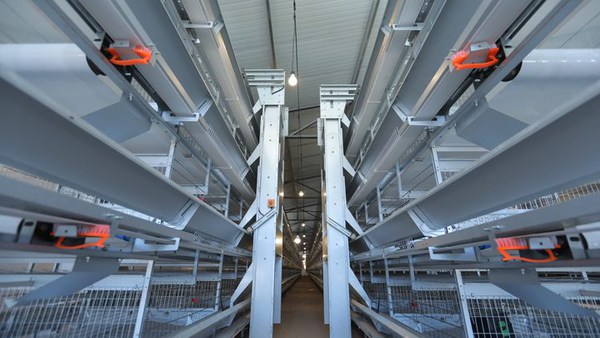
How Do Battery Cages Improve Manure and Air Quality Control?
Manure control is one of the most important management points in a laying hen farm. If manure remains in the house for too long, it can increase moisture, ammonia, odor, fly problems, and disease pressure.
Battery cage systems separate birds from manure and allow manure to be removed by scraper or belt system. In large H-type cage houses, belt manure removal is usually preferred because it can remove manure from each tier more regularly.
Dryer Manure
Regular manure removal helps reduce moisture accumulation and keeps the poultry house cleaner.
Lower Ammonia Risk
Removing manure regularly helps reduce ammonia pressure and supports better air quality.
Cleaner Work Area
Cleaner aisles and cage rows make daily inspection, vaccination, and equipment maintenance easier.
How Does Egg Collection Change After Using Battery Cages?
Egg collection becomes more organized after using battery cages. The cage bottom slope allows eggs to roll toward the egg trough, making manual collection easier in small farms and automatic collection more efficient in large farms.
For commercial farms, the Livi Automatic Egg Collection System transfers eggs from cage rows to the collection area. This reduces walking distance, lowers repeated handling, and improves daily egg collection speed.
How Should Ventilation Be Planned Around Battery Cages?
Battery cages increase bird density inside the chicken house, so ventilation must be designed together with cage layout. A cage system without proper airflow can lead to heat stress, wet manure, uneven bird comfort, and unstable egg production.
The Livi Ventilation Design Standard combines cage rows, fan position, air inlet location, cooling pad area, lighting, sensors, and control cabinet. For H-type cage houses, mechanical ventilation and cooling pads are strongly recommended.
What Daily SOP Should a Battery Cage Farm Follow?
A battery cage farm still needs daily checks. Automation reduces repetitive labor, but workers must inspect birds, water, feed, manure removal, egg collection, ventilation, lighting, and production data every day.
FAQ About Battery Cages for Laying Hens
Do battery cages only save space?
No. Space saving is only one advantage. Battery cages also help improve feeding management, water supply, manure removal, egg collection, bird inspection, and production recording. For commercial farms, the main value is management standardization. A well-designed cage system helps workers follow daily SOP more easily and reduces the uncertainty caused by manual operation.
Which cage is better for a farm above 30,000 layers?
For farms above 30,000 layers, H-type layer cages are usually more suitable because they provide higher stocking density and better automation compatibility. The Livi H-Type Cage System can work with automatic feeding, nipple drinking, belt manure removal, automatic egg collection, ventilation fans, cooling pads, and environment control. This makes it more practical for commercial egg production.
Can a small farm use battery cages without full automation?
Yes. Small farms can start with A-type layer cages and automatic drinking first. Feeding, manure removal, and egg collection can be added according to capacity, labor cost, and budget. This staged configuration is common for farms that want to control initial investment while improving basic hygiene, space utilization, and daily bird management.
Why is manure removal important in battery cage farms?
Manure removal is important because manure affects moisture, ammonia, odor, fly control, and air quality. If manure stays inside the house for too long, the environment becomes harder to manage. A scraper or belt manure removal system helps keep the house cleaner, reduces manual cleaning pressure, and supports better ventilation performance.
What should buyers confirm before choosing a cage system?
Buyers should confirm bird capacity, chicken house size, land area, cage type, automation level, ventilation method, power supply, water source, manure outlet, egg collection method, destination city or port, and future expansion plan. With these details, Livi Machinery can prepare a customized commercial laying hen cage system layout and equipment configuration.
Need a Battery Cage System That Solves Your Farm Management Problems?
If your laying hen farm is facing labor pressure, limited land, difficult manure cleaning, slow egg collection, poor ventilation, or unstable daily management, Livi Machinery can provide cage model selection, poultry house layout, automatic feeding and drinking configuration, manure removal design, egg collection planning, ventilation design, and installation guidance according to your capacity, land size, climate, and investment plan.
You might like:
 Why the Price of Chicken Layer Cage is Critical for a 30,000-Bird Farm in Tanzania
 What Should a Buyer Know About 50,000 Layer Farm Equipment? | H-Type Cage System
 How to Choose Poultry Cage Capacity for Your Farm?
 How much price the A type layer battery cage system?
 Nigeria Layer Chicken Cage Project:Enhancing Poultry Farming Efficiency