LIVI POULTRY EQUIPMENT | COMMERCIAL FARM OPERATIONS GUIDE
How Many Workers Are Needed for a 50,000-Layer Automatic Poultry Farm?
Labor is an important operating cost for a commercial egg farm. When planning a 50,000-layer poultry farm, investors need to understand how many workers are required, which tasks can be automated, and which responsibilities still need trained personnel. A fully automatic H-type layer cage system can reduce repetitive manual work in feeding, drinking, manure removal and egg collection. However, automation does not eliminate the need for bird inspection, equipment monitoring, maintenance, egg handling and production management.QUICK ANSWER
A 50,000-layer automatic poultry farm can use approximately 6–8 core operating staff as an initial planning estimate when automatic feeding, drinking, manure removal and egg collection are installed. The team typically covers farm supervision, bird and equipment checks, egg handling, routine maintenance and production records. Additional workers may be needed for egg grading and packing, multiple shifts, cleaning, security or outsourced activities. The final staffing plan depends on the number of poultry houses, automation level, daily egg handling requirements and farm management practices.
1. How Many Workers Does a 50,000-Layer Farm Need?
For preliminary planning, a 50,000-layer farm with integrated automatic equipment can use a core team of approximately 6–8 people. This is a planning reference rather than a fixed staffing standard. The actual number depends on whether the farm uses one poultry house or two, how eggs are collected and packed, how many working shifts are required, and whether maintenance, cleaning, security and transportation are handled by the farm’s own employees or external contractors.| Staffing Item | Illustrative Allocation | Main Responsibility |
|---|---|---|
| Farm Supervisor | 1 person | Production planning, records, coordination and problem escalation |
| Bird Inspection and Daily Checks | 2 people | Bird behavior, mortality records, feed and water checks |
| Egg Collection and Handling | 2–3 people | Monitor collection equipment and manage egg transfer or packing support |
| Equipment and Environmental Checks | 1 person | Inspect motors, belts, ventilation and control systems |
| Records and General Support | 0–1 person | Production records, hygiene checks and additional support |
| Core Team | Approximately 6–8 | Initial planning reference |
2. How Does Automatic Chicken Raising Equipment Reduce Labor Requirements?
The main labor-saving benefit of an automatic layer cage system is the reduction of repetitive manual tasks. Rather than relying primarily on workers to distribute feed, supply drinking water, remove manure and collect eggs manually, the farm uses integrated equipment to perform these operations.Automatic Feeding System
Automatic feeding equipment distributes feed along the cage rows. Workers still need to check feed delivery, motor operation, conveyor movement and feed availability, but they do not need to distribute every feeding manually.
Automatic Drinking System
Nipple drinking lines provide water to the birds. Staff should inspect water pressure, filters, regulators, leakage and blocked drinkers. Automation reduces repetitive water distribution work but does not replace routine inspection.Automatic Manure Removal
Manure belts and discharge conveyors move manure away from the cage rows. Workers monitor belt operation, drive motors, discharge points and cleaning schedules. This can reduce the amount of manual manure handling required.Automatic Egg Collection
Egg belts and collection conveyors move eggs from the cage rows toward the collection area. The labor requirement then depends on how the eggs are transferred, graded, packed, stored and prepared for delivery.| Operation | With Automatic Equipment | Tasks Still Required |
|---|---|---|
| Feeding | Mechanical feed distribution | Check feed supply, motors and conveyors |
| Drinking | Nipple water delivery | Check pressure, filters and leakage |
| Manure Removal | Belts and conveyors transport manure | Inspect belts, drives and discharge points |
| Egg Collection | Belts transfer eggs to collection points | Monitor equipment, handle eggs and manage packing |
| Environment | Controllers operate ventilation and alarms | Check birds, sensors, fans and emergency systems |
3. What Factors Affect the Number of Workers Needed?
Number of Poultry Houses
A 50,000-layer farm may use one house or two houses with approximately 25,000 hens each. The choice depends on land availability, farm management, construction and the overall equipment design. Two houses may require separate daily inspections, ventilation checks, manure system inspections and equipment monitoring. However, some duties can be shared, including production management, purchasing, record keeping and central egg handling. Two houses do not automatically require twice as many workers.Egg Grading and Packing
Egg collection is not always the final production step. Farms that sell eggs in bulk may need a different staffing arrangement from farms that grade, sort, pack and prepare retail cartons on site. If egg grading and packing are highly automated, the additional labor requirement may be lower than in a facility that handles these activities manually. Buyers should therefore define the egg handling scope before estimating total staff.Maintenance and Technical Skills
Automatic equipment still requires preventive maintenance. Motors, belts, sensors, controllers, fans and water systems should be checked according to the equipment manuals. A farm with a trained equipment operator may resolve routine issues more quickly. More complex electrical or mechanical work may require a qualified technician or external service provider. Maintenance responsibilities should be defined before the farm starts operating.Working Hours and Shift Arrangements
A headcount of six to eight people does not automatically mean the farm has sufficient coverage for every hour of the day. If the operation requires multiple shifts, extended egg packing hours or continuous on-site technical coverage, the staffing plan must account for shift handovers, leave and weekly rest days.4. Does a Fully Automatic Farm Need Only Four Workers?
Some highly automated farm configurations may operate with a small core team, and certain published LIVI pages describe estimates of four to six workers. However, this figure should not be treated as a universal requirement for every 50,000-layer farm. A small team is more realistic when feeding, drinking, manure removal and egg collection are automated; egg packing is limited or separately staffed; maintenance is well organized; and the farm uses efficient daily procedures. Additional workers may be necessary when eggs are graded and packed on site, when two poultry houses require separate monitoring, or when the farm needs several shifts. Before adopting a four-person staffing plan, confirm the daily workload and required coverage for every critical operation.Planning note: Use six to eight core staff as a preliminary estimate, then calculate the full workforce from egg handling, shift coverage, maintenance, cleaning and outsourced services. Do not use a low headcount as the only measure of automation efficiency.
5. What Should Workers Check Every Day?
Even with automatic equipment, a 50,000-layer farm needs a structured daily operating routine. The purpose is to identify bird health issues and equipment problems before they cause significant production losses.| Daily Check | What to Inspect | Responsible Role |
|---|---|---|
| Bird Condition | Behavior, mortality, feed intake and signs of abnormality | Farm supervisor or bird inspection staff |
| Feed and Water | Feed availability, water pressure, leakage and blockages | House inspection staff |
| Egg Collection | Belt movement, blockages, damaged eggs and collection records | Egg handling staff |
| Manure Removal | Belt condition, motor operation and discharge points | Equipment operator |
| Ventilation | Fans, controllers, alarms and environmental readings | Trained equipment operator |
| Production Records | Egg numbers, feed and water use, mortality and equipment alarms | Farm supervisor or assigned staff |
6. How Does Automation Affect Labor Costs?
Automatic equipment can reduce the need for repetitive manual work, but the financial benefit should be evaluated against the equipment investment, maintenance, energy consumption and required technical support. When comparing a manual or semi-automatic farm with a fully automatic H-type system, calculate labor costs using local wage rates and the actual number of paid working hours. Include overtime, employee benefits, replacement coverage and any contracted services where applicable. Do not estimate labor savings by comparing only the number of permanent employees. A fair comparison should use the same farm capacity, egg handling scope, working hours and production requirements.| Cost Factor | What to Include |
|---|---|
| Direct Labor | Wages, working hours, overtime and benefits |
| Technical Support | Routine maintenance and external service visits |
| Automation Costs | Electricity, spare parts and preventive maintenance |
| Egg Handling | Collection, grading, packing and delivery preparation |
| Management | Production records, supervision and training |
7. How Should a 50,000-Layer Farm Plan Its Equipment and Staffing Together?
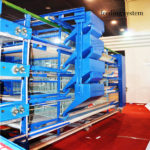
Staffing should be considered when the cage system and poultry house layout are designed, rather than only after the equipment has been installed. For a 50,000-layer commercial egg farm, LIVI recommends evaluating a 4-tier, 1200mm H-type layer cage model with 144 birds per set. The farm may use one poultry house or two houses of approximately 25,000 hens each, depending on land, management and engineering requirements. The equipment layout should coordinate:- Automatic feeding and drinking systems
- Manure belts and external discharge equipment
- Egg collection and the egg handling area
- Ventilation, lighting and environmental controls
- Maintenance access and equipment inspection routes
- Control cabinets, alarms and backup power planning

8. Frequently Asked Questions
How many workers are needed for a 50,000-layer automatic poultry farm?
Approximately six to eight core operating staff is a reasonable preliminary planning reference for a farm with integrated automatic feeding, drinking, manure removal and egg collection. The actual number depends on packing, shifts, maintenance and management requirements.Can four workers manage 50,000 laying hens?
Some highly automated operations may function with four to six core workers, but this is not a universal staffing standard. Confirm that bird inspections, equipment checks, egg handling, maintenance and shift coverage can all be completed safely.Does automatic feeding eliminate manual work?
It reduces repetitive feed distribution work, but workers must still check feed availability, conveyor operation, motors and abnormal conditions.Does automatic egg collection reduce labor requirements?
It can reduce manual egg picking and transfer work. The final labor requirement depends on the collection layout and whether grading, packing and storage are also automated.Will two poultry houses require twice as many workers?
No. Two houses may require additional inspection and equipment checks, but management, record keeping and some egg handling activities can be shared. The final team should be based on the actual operating schedule.What information is needed to estimate farm labor accurately?
Provide the flock size, number of houses, automation scope, egg collection and packing method, working hours, maintenance arrangement and outsourced services. These details help establish a more realistic staffing plan.Conclusion: Plan Labor Around the Complete Automatic System
A 50,000-layer automatic poultry farm can use approximately six to eight core operating staff as a preliminary planning estimate. The actual workforce depends on how the farm handles eggs, organizes shifts, maintains equipment and manages one or more poultry houses. Automatic feeding, drinking, manure removal and egg collection can reduce repetitive manual tasks, but daily bird inspection, equipment monitoring and production management remain essential. A complete equipment layout and practical operating plan should be developed together.50,000-LAYER AUTOMATIC POULTRY FARM SOLUTIONS
Plan Your Automatic Layer Cage Equipment
Planning a commercial farm with 50,000 laying hens? LIVI can discuss H-type cage configurations, automatic feeding, drinking, manure removal, egg collection and environmental control based on your poultry house layout and project requirements.- Project country and location
- Target flock capacity and number of poultry houses
- Available land or poultry house dimensions
- Required automatic equipment
- Egg collection and packing arrangements