Managing 30,000 broilers in a floor-rearing system requires meticulous planning to balance bird welfare, feed efficiency, and operational costs. This article analyzes the engineering principles of automatic broiler feeding and drinking systems tailored for large-scale floor-rearing operations, supported by empirical data and actionable procurement strategies.
Core Technical Features of Broiler Floor-Rearing Automation Systems
- Adaptive Feeding Mechanisms for Floor Environments
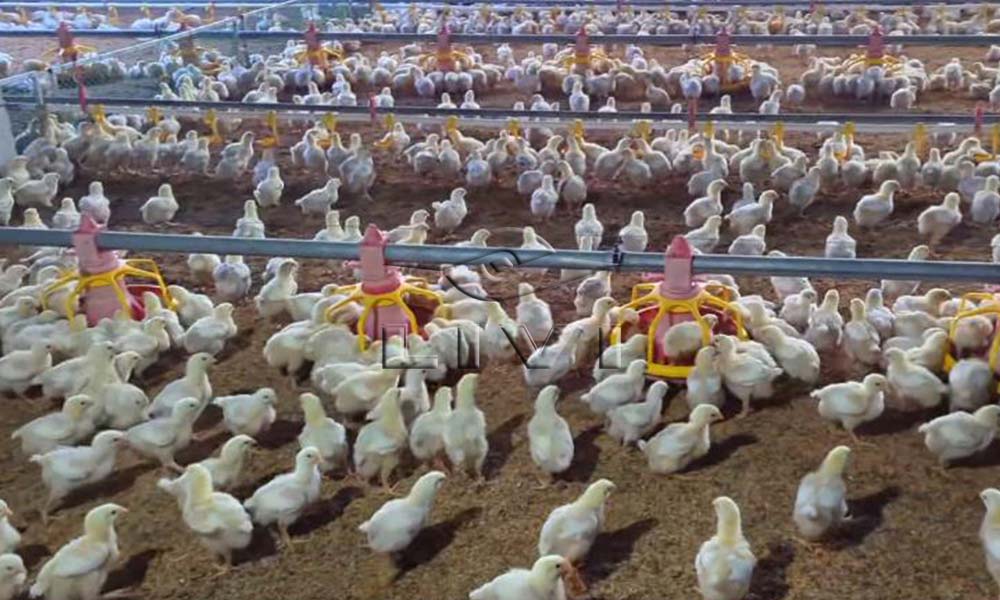
- Auger Design: Corrosion-resistant stainless steel augers (Ø120mm) deliver feed at 15–20kg/minute per line, minimizing spillage on litter floors.
- Height Adjustment: Motorized feeder pans adjust from 10cm (day-old chicks) to 45cm (mature broilers) to prevent feed contamination by litter.
- Data Integration: RFID-tagged feed bins track consumption per zone, enabling real-time adjustments via PLC controllers (±2% accuracy).
- High-Capacity Drinking Solutions
- Nipple Drinker Layout: 1 nipple per 10–12 birds (3,000 nipples total) with 360° activation, ensuring access in densely populated floor spaces.
- Pressure Regulation: 15–25kPa water pressure maintains consistent flow (80–100ml/minute) across 150-meter lines, even with uneven floor slopes.
- Contamination Prevention: Drip cups under each nipple reduce litter moisture by 35% (University of Georgia Poultry Science, 2022).
- System Compatibility with Floor-Rearing Challenges
- Litter Management: Feed lines mounted 30cm above litter minimize dust ingress.
- Ventilation Synergy: Centralized control interfaces link feeding schedules to HVAC systems, reducing ammonia peaks during rest periods.

Performance Metrics: 30,000-Broilers Floor-Rearing Equipment Case Study
- Location: Poultry farm in Nigeria (2023 implementation).
- Baseline: Manual feeding, FCR 1.68, 8% mortality.
- Post-Automation Results:
- Feed Conversion Ratio (FCR): 1.57 (-6.5%)
- Daily Weight Gain: 68g → 73g (+7.3%)
- Labor Costs: Reduced from 0.22/𝑏𝑖𝑟𝑑𝑡𝑜0.22/birdto0.09/bird
Procurement Guidelines: Avoiding Costly Errors
- Critical Design Parameters
- Line Spacing: 2.5–3.0 meters between feed/drink lines to prevent overcrowding.
- Motor Power: 0.75kW motors per 100-meter line for floor-rearing friction resistance.
- Corrosion Resistance: ASTM A554-grade stainless steel for humid litter environments.
- Common Missteps
- Underestimating Litter Impact: Non-enclosed feeders accumulate dust, increasing maintenance by 2 hours/day.
- Ignoring Slope Compensation: Floors with >2% slope require pressure-compensated drinkers.
- Overlooking Training: 92% of system failures stem from incorrect PLC programming by untrained staff.
- Cost-Benefit Analysis
- Capital Cost: 18,000–18,000–22,000 for 30,000-bird system.
- Payback Period: 14–18 months via feed/labor savings.

Implementation Checklist
- Pre-Installation
- Conduct floor flatness tests (tolerance: ±1cm/10m).
- Download our Floor-Rearing Layout Template:
- Post-Installation
- Schedule biweekly nozzle inspections to prevent litter clogs.
- Utilize our Automation Health Dashboard
Take the Next Step
- Request 30000 Broiler Floor-Rearing System Quote:
- Watch Installation Video: Scan QR code below.
- Limited Offer: Free litter moisture sensor with orders placed before [Date].