How to Choose Automatic Layer Cage Equipment for a 30,000-Bird Farm in Zambia
Planning an automatic poultry farm for 30,000 laying hens in Zambia? Choosing the right equipment involves more than comparing chicken cage prices. The cage model, bird capacity, poultry house layout, feeding and drinking systems, manure removal, egg collection, ventilation, and electrical supply must be planned together.
This guide explains how to select automatic layer cage equipment in Zambia, how many H-type cage sets are required, what systems should be included, and what commercial farm buyers should check before purchasing.
QUICK ANSWER
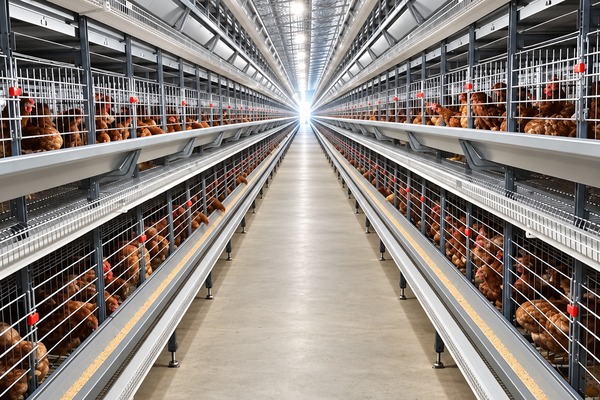
For a commercial 30,000-layer poultry farm in Zambia, LIVI recommends a single poultry house with a 4-tier, 1200mm H-type layer cage system holding 144 hens per set. A practical arrangement of four rows with 53 sets each provides 30,528 bird positions. The equipment package should include automatic feeding, nipple drinking, manure belt removal, egg collection, ventilation, lighting and environmental controls. Before buying, confirm the cage specification, poultry house layout, power and water supply, installation requirements and complete quotation scope.
1. Which Layer Cage System Is Best for 30,000 Hens in Zambia?
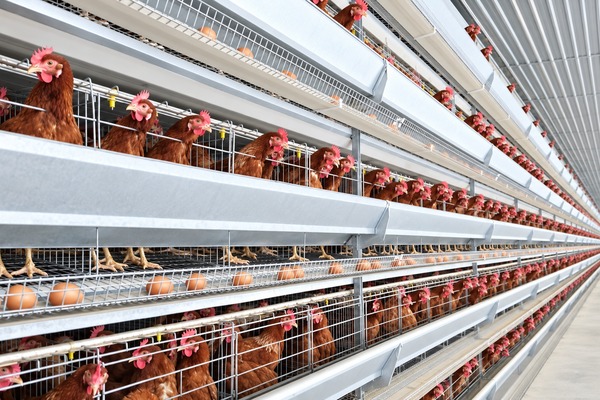
For a new 30,000-layer commercial egg farm, LIVI recommends the H-type layer cage system as the primary choice. H-type cages use a vertical multi-tier arrangement and are compatible with automatic feeding, nipple drinking, manure belts and egg collection equipment.
An A-type system can still be considered if a buyer has a lower initial equipment budget, owns suitable smaller poultry houses, or does not require the same automation level. However, for a new project focused on integrated automation, the H-type solution is generally more suitable.
Selection Factor
A-Type Layer Cage
H-Type Layer Cage
Structure
A-frame cage arrangement
Vertical multi-tier arrangement
Initial Cage Investment
Generally lower for a basic configuration
Generally higher with automatic systems
Automation
Manual, semi-automatic or configured automatic options
Suitable for integrated automatic operation
Manure Removal
Scraper or other selected system
Integrated manure belts
Egg Collection
Depends on the cage package
Compatible with automatic egg collection
30,000-Layer Recommendation
Alternative for selected projects
Preferred for a new automatic farm
The final equipment choice should reflect the actual land area, building dimensions, local operating conditions, project budget and long-term management requirements.
LIVI’s preferred H-type model for this project is the 1200mm, 4-tier, 2-door cage system with a rated capacity of 144 laying hens per set. This is a popular configuration among LIVI customers and is designed to work with commercial automatic equipment.
Specification
Recommended Configuration
Cage Type
H-Type Layer Cage
Reference Model
1200mm
Number of Tiers
4
Door Configuration
2-door model
Reference Cage Specification
1200 × 625 × 480 mm
Rated Capacity
144 birds per set
Automation
Feeding, drinking, manure removal and egg collection
These reference dimensions describe the cage unit specification, not the complete poultry house dimensions. The selected product, stocking density and final equipment layout must be confirmed before ordering.
3. How Many H-Type Cage Sets Are Needed for 30,000 Layers?
Using the 144-bird H-type cage model, the mathematical minimum number of sets is:
30,000 ÷ 144 = 208.33, rounded up to 209 cage sets.
To create a practical row arrangement, an example layout uses four cage rows with 53 sets in each row:
Planning Item
Reference Value
Planned Layer Capacity
30,000 hens
Rated Birds per Set
144
Mathematical Minimum
209 sets
Example Cage Rows
4
Sets per Row
53
Total Installed Sets
212
Total Installed Positions
30,528
The extra installed positions arise from the practical row arrangement. This is a preliminary capacity calculation, not a final engineering drawing. Actual cage row lengths, service spaces and stocking conditions must be checked before construction or equipment production.
4. What Automatic Equipment Should Be Included?
A 30,000-layer cage system should be evaluated as a complete operating package. Buyers should confirm which automatic systems and supporting components are included in the supplier’s quotation.
Equipment System
Recommended Components
Purchase Checkpoint
Automatic Feeding
Row feeding machines, conveyors, motors and controls
Confirm feed silo and main transfer equipment
Nipple Drinking
Nipples, water pipes, pressure regulators and filters
Confirm water source, pumps and storage
Manure Removal
Manure belts, belt drives and discharge conveyors
Confirm external discharge route
Egg Collection
Egg belts, row collection and central handling as specified
Confirm collection endpoint and egg room
Ventilation
Exhaust fans, suitable air inlets and controls
Confirm airflow calculations
Environmental Control
Lighting, controllers, sensors, alarms and cooling as required
Confirm climate and electrical specifications
Automatic Feeding and Drinking
The feeding system should deliver feed to the cage rows according to the farm’s management schedule. Confirm whether feed storage, conveying equipment, feeding machinery and controls are all included.
Nipple drinking lines require reliable water pressure, suitable filtration and maintenance. Water storage, water treatment and pumps should be planned with the poultry house even when they are not included in the basic cage package.
Automatic Manure Removal
Manure belts installed beneath the cage tiers carry manure toward the discharge system. Cross conveyors and external discharge equipment may be required to move manure outside the house.
Ask where the manure will be discharged and how it will be stored, transported or treated. The poultry house layout should reserve suitable access and operating space for this process.
Automatic Egg Collection
An automatic egg collection system can include egg belts, row-end transfer equipment and a central collection line. The exact components depend on the cage row arrangement and planned egg collection area.
Confirm whether egg grading, counting and packing machines are included or supplied separately. They should not be assumed to be part of every automatic cage system quotation.
5. What Poultry House Size Is Needed for 30,000 Layers?
For this project, LIVI recommends beginning with a one-house H-type cage layout. However, the building dimensions must be developed from the selected equipment rather than calculated from bird quantity alone.
The house design should consider the full cage row length, aisle clearances, feeding equipment, manure discharge equipment, egg collection station, ventilation system and structural elements.
Cage row lengths and installed equipment dimensions
Service aisles and maintenance access
Manure discharge and egg collection zones
Feed storage and delivery connections
Ventilation equipment and airflow paths
Electrical control cabinets and safe access
Space for egg handling and manure management
A 1200mm reference cage dimension is not a complete cage-set footprint or building module length. It should not be multiplied by the number of sets to claim a final poultry house length without verified manufacturer layout drawings.
If the poultry house has not yet been built, select the cage model and obtain a preliminary equipment layout before finalizing construction. This helps reduce the risk of insufficient aisle width, incorrect equipment positions or expensive modifications.
Related guide: 20,000 Layers H-Type Poultry Farm Equipment in Zambia.
6. How Should Ventilation Be Designed for a Zambia Poultry Farm?
Climate conditions in Zambia differ by region and season. Commercial poultry houses need ventilation designs that respond to local temperature, humidity, rainfall conditions and the heat produced by the flock and equipment.
For a 30,000-layer H-type poultry house, the design should assess mechanical airflow, air inlets, temperature monitoring, humidity control and whether cooling equipment is required. Cooling pads should not be selected only because the farm is located in Africa; their suitability depends on actual local climate conditions.
Calculate airflow for the actual bird population and house design.
Consider seasonal temperature and humidity changes.
Provide suitable air inlets and exhaust arrangements.
Monitor temperature, humidity and equipment operation.
Reduce unnecessary manure accumulation and moisture.
Provide backup power and an emergency ventilation plan.
The final ventilation specifications should be established by qualified engineering personnel and checked against the selected building structure and local operating conditions.
7. What About Electricity and Water Reliability in Zambia?
Automatic feeding, manure removal, egg collection and mechanical ventilation rely on properly designed electrical equipment. Before purchasing, confirm the local supply voltage, frequency, phase arrangement, available electrical capacity and protective devices.
For locations with unstable electricity supply, a suitable backup power system should be included in farm planning. The generator and emergency arrangements should be sized for critical systems according to qualified electrical design.
Water reliability is equally important. Nipple drinking systems need suitable water pressure and filtration, and the farm should plan sufficient storage and water treatment according to its operating conditions.
LIVI can discuss equipment electrical configurations for the project, while local installation and protective arrangements should be verified by qualified professionals.
The cheapest chicken cage quotation is not always the most suitable commercial farm solution. Buyers should compare the cage quantities, rated bird positions, automation package, environmental control systems, installation requirements and commercial terms.
For example, one quotation may include H-type cage structures and drinking lines, while another includes automatic feeding, manure belts, egg collection and ventilation. These are not equivalent packages.
Quotation Item
What Buyers Should Confirm
H-Type Cage Quantity
144-bird model, number of sets and rows
Automatic Feeding
Feeding machinery, conveyors and silo scope
Automatic Drinking
Water lines, filters and regulators
Manure Removal
Belts and external discharge equipment
Egg Collection
Row collection and central collection scope
Environment
Ventilation, cooling, lighting and controls
Commercial Terms
EXW, FOB or CIF, freight, lead time and payment
Installation
On-site guidance, remote support and exclusions
Land, building construction, electrical works, backup power, water infrastructure, shipping and installation may be quoted separately. Ask for an itemized bill of materials and written exclusions before deciding.
For additional Zambia pricing context, see Poultry Layer Cage Prices in Zambia with Feeding and Drinking Systems.
A supplier should be able to demonstrate the proposed equipment configuration, provide a preliminary poultry house layout, identify the full scope of automatic systems and explain how installation and after-sales service will be supported.
Confirm the farm capacity: 30,000 laying hens and any future expansion plans.
Select the cage model: 1200mm, 4-tier H-type with 144 birds per set.
Check the cage calculation: Confirm total sets, rows and installed capacity.
Review the layout: Check aisles, egg collection, manure discharge and equipment positions.
Review local utilities: Electricity, backup power, water supply and climate requirements.
Check installation: Confirm on-site or remote guidance, manuals and training responsibilities.
Compare quotations: Review equipment prices, freight, exclusions, warranties and lead time.
Where available, request photographs or documentation from comparable commercial farms. Verify that the supplied project evidence corresponds to the claimed equipment and capacity.
10. Can LIVI Provide a Complete 30,000-Layer Farm Solution in Zambia?
LIVI can discuss an H-type layer cage solution based on a planned capacity of approximately 30,000 hens and the buyer’s site conditions. The preliminary proposal can cover cage quantity calculations, row arrangements, feeding, drinking, manure removal, egg collection and relevant environmental equipment.
Installation support can be discussed through on-site engineering guidance or remote assistance using drawings, manuals, videos and online technical communication. The agreed responsibilities and costs should be confirmed before placing an order.
To request a more accurate equipment proposal, provide:
Project location in Zambia
Target capacity of 30,000 laying hens
Existing poultry house dimensions or available land size
Required automatic systems
Electricity and water conditions
Expected purchasing schedule and delivery destination
Frequently Asked Questions
What is the best automatic layer cage system for 30,000 chickens in Zambia?
For a new commercial egg farm requiring integrated automation, LIVI recommends its 4-tier, 1200mm H-type layer cage system with 144 birds per set.
How many H-type cage sets do I need for 30,000 layers?
At 144 birds per set, the mathematical minimum is 209 sets. A preliminary four-row arrangement with 53 sets per row provides 212 sets and 30,528 installed positions.
Can 30,000 hens be raised in one poultry house?
Yes, subject to a suitable H-type equipment layout, ventilation design, maintenance access and building structure. Exact house dimensions must be calculated from the selected equipment.
Is an A-type or H-type cage better for 30,000 layers?
H-type is generally the preferred choice for a new fully automatic 30,000-layer project. A-type can be evaluated for lower-budget or divided-house projects with different operating requirements.
What automatic equipment should be included?
The proposed package should include H-type cages, automatic feeding, nipple drinking, manure removal and egg collection, together with suitably designed ventilation, lighting and environmental controls.
Does a Zambia automatic poultry farm need backup electricity?
A suitable emergency power plan is strongly recommended where critical systems rely on electricity, especially mechanical ventilation. The required backup capacity depends on the final equipment design.
Can LIVI provide poultry house drawings before construction?
LIVI can prepare a preliminary cage and equipment layout based on project requirements. Final building structures and electrical installations should be verified by qualified engineering professionals.
Conclusion: Choose a Complete Automatic Farm System
For a new 30,000-layer poultry farm in Zambia, LIVI recommends beginning with a 4-tier, 1200mm H-type layer cage system with 144 birds per set. A preliminary arrangement of 212 sets can provide 30,528 installed bird positions, while the final configuration must follow the actual poultry house design.
The most suitable investment is not determined by cage price alone. A complete automatic system should coordinate feeding, drinking, manure removal, egg collection, ventilation, environmental controls and the supporting utilities. Confirming these details before purchasing helps buyers choose equipment that fits the planned farm.
30,000-LAYER POULTRY FARM SOLUTIONS IN ZAMBIA
Request Your H-Type Cage Layout & Equipment Quotation
Planning a commercial egg farm in Zambia? Share your bird capacity, project location, poultry house or land dimensions and preferred automation systems. LIVI can discuss a suitable H-type cage configuration and preliminary farm equipment plan.
Target capacity: 30,000 laying hens
Project location in Zambia
Available land or existing poultry house dimensions
Automatic feeding, manure removal and egg collection requirements