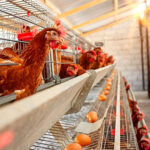
Poultry Farm Automation Decision Guide
Semi-Automatic vs Fully Automatic Poultry Equipment: Which System Is Right for Your Farm?
Semi-automatic poultry equipment is usually more suitable for small and medium farms that need to control initial investment and still have available labor. Fully automatic poultry equipment is generally the better choice for large commercial farms where labor saving, manure control, egg collection, ventilation, and consistent daily operation are more important.
For many layer projects, a practical decision rule is: smaller farms can start with partial automation, while farms above about 30,000 layers should seriously consider a fully automatic H-type cage system. The final choice should also consider labor cost, electricity reliability, house size, climate, biosecurity, future expansion, and investment plan.
Lower initial investment, more manual work
Higher automation, lower routine labor demand
Farm size + labor + power + expansion
30,000+ layers usually benefit more from full automation

What Is the Difference Between Semi-Automatic and Fully Automatic Poultry Equipment?
The main difference is how many daily farm operations still depend on workers. A semi-automatic farm automates some tasks, usually drinking and selected feeding or manure operations, while workers still handle other tasks manually. A fully automatic farm connects feeding, drinking, manure removal, egg collection, ventilation, cooling, lighting, and control equipment into one integrated operating system.
The choice is not simply “cheap versus expensive.” Buyers should compare how much labor each system requires every day, how many birds one worker must manage, how manure is removed, how eggs are collected, and whether the farm is expected to expand.
| Item | Semi-Automatic System | Fully Automatic System |
|---|---|---|
| Feeding | Manual or partially mechanized | Automatic silo, conveyor and feeding machine |
| Drinking | Usually automatic nipple drinking | Automatic drinking with filtration and pressure control |
| Manure removal | Manual, scraper, or partially automatic | Automatic belt manure removal and cross conveyor |
| Egg collection | Manual or semi-automatic | Automatic egg belts and central collection |
| Environment control | Manual fan or cooling management | Sensors, fans, cooling pads and control cabinet |
Which System Is Better for Different Poultry Farm Sizes?
Farm size is one of the clearest decision factors. Small farms can often operate efficiently with partial automation because daily feed, manure, and egg volumes are still manageable. As capacity increases, manual work becomes harder to control and automation has a greater operational value.
For buyers comparing semi automatic vs fully automatic poultry equipment, farm capacity should be evaluated together with labor cost and future expansion rather than used as the only rule.

When Is Semi-Automatic Poultry Equipment the Better Choice?
Semi-automatic equipment is a practical choice when the farm needs to control initial investment and the owner can still rely on available labor. It is also useful when the project will be built in phases and the farmer wants to add automation later.
Controlled Initial Budget
The farm can start with essential systems and add more automation after production stabilizes.
Smaller Farm Size
Manual egg collection or partial manure handling remains practical at lower bird numbers.
Available Labor
Where labor is readily available, full automation may not be the first investment priority.
Phased Expansion
The farm can design future feeding, manure, or egg systems into the layout from the beginning.
A typical semi-automatic layer farm may use the Livi A-Type Layer Cage with automatic nipple drinking, optional feeding equipment, scraper manure removal, and manual or semi-automatic egg collection.

When Is Fully Automatic Poultry Equipment the Better Choice?
Fully automatic equipment is more suitable when the farm has a large bird population, labor cost is high, manure must be removed frequently, egg collection volume is large, or the project is designed for standardized commercial production.
For layer farms above 30,000 birds, Livi Machinery usually recommends the Livi H-Type Cage System because it works naturally with automatic feeding, nipple drinking, belt manure removal, automatic egg collection, ventilation, cooling pads, and environment control.
| Commercial Farm Need | Why Full Automation Helps |
|---|---|
| Large daily feed volume | Automatic feeding reduces repeated manual transport |
| High manure volume | Belt manure removal supports cleaner houses |
| Large egg output | Automatic collection reduces manual handling |
| Hot climate | Fans, cooling pads and sensors support climate control |
| Future expansion | Standardized systems are easier to repeat across additional houses |
How Do the Two Systems Affect Labor and Daily Farm Management?
The largest operational difference is the amount of repeated manual work. Semi-automatic farms still depend more heavily on workers for feeding, manure management, egg handling, and monitoring. Fully automatic farms shift workers from physical handling to inspection and equipment supervision.
| Daily Task | Semi-Automatic | Fully Automatic |
|---|---|---|
| Feed distribution | More worker involvement | Mainly equipment supervision |
| Egg collection | Workers walk cage rows | Egg belts transfer eggs to collection point |
| Manure cleaning | Manual or scraper assistance | Automatic manure belts |
| Environment management | More manual checks | Sensors and automatic control support operators |
How Does Cage Type Affect the Automation Decision?
Cage type and automation should be selected together. A-type cages are commonly used for small and medium farms, while H-type cages are designed for larger, higher-density poultry houses where manure belts, egg belts and mechanical ventilation can be integrated more easily.
| Cage Model | Specification | Capacity | Typical Automation Level |
|---|---|---|---|
| 4-tier 5-door A-type | 1950mm × 450mm × 410mm | 160 birds/set | Basic to semi-automatic |
| 4-tier 2-door H-type | 1200mm × 625mm × 480mm | 144 birds/set | Full automation |
| 4-tier 4-door H-type | 1800mm × 600mm × 430mm | 192 birds/set | Full automatic commercial system |
What Should Buyers Check Before Choosing Full Automation?
Full automation is not automatically the correct choice for every farm. Buyers should confirm whether the supporting infrastructure can operate the system reliably.
Power Supply
Check voltage stability, generator capacity and backup power requirements.
Water Supply
Confirm water volume, filtration, pressure and storage.
Technical Staff
Workers should understand motors, belts, sensors, routine inspection and maintenance.
Spare Parts
Common maintenance items should be identified before operation begins.
What Is the Better Choice for a 50,000-Layer Commercial Farm?
For a 50,000-layer farm, a fully automatic H-type system is generally the more practical solution. At this capacity, feed volume, manure output, egg collection, and ventilation requirements make manual operation increasingly difficult.
Example: 50,000 layers ÷ 192 birds/set ≈ 261 sets of 4-tier 4-door H-type layer cages.
A typical configuration can include automatic feeding, nipple drinking, belt manure removal, the Livi Automatic Egg Collection System, fans, cooling pads, lighting, and environment control. The Livi Poultry Farm Layout Solution should coordinate all equipment with the chicken house before construction is finalized.
FAQ About Semi-Automatic vs Fully Automatic Poultry Equipment
Is fully automatic poultry equipment always better?
No. Fully automatic equipment is more suitable when farm size, labor cost, manure volume, egg output and expansion plans justify the higher level of automation. A smaller farm may operate efficiently with semi-automatic equipment and invest the remaining budget in housing, ventilation, chicks or working capital.
What farm size should use fully automatic poultry equipment?
There is no single capacity that applies to every farm, but full automation becomes increasingly practical from around 30,000 layers upward. For 50,000–100,000+ layers, automatic feeding, manure removal, egg collection and environmental control usually provide stronger operational advantages than manual or semi-automatic systems.
Can a semi-automatic farm be upgraded later?
Yes, if the original farm layout reserves enough space and compatible routes for future equipment. Buyers planning phased automation should consider feed silos, manure outlets, egg collection routes, electrical capacity and poultry house dimensions from the beginning. Retrofitting without advance planning can be more difficult.
Does fully automatic equipment eliminate the need for workers?
No. Automation reduces repetitive manual work, but staff are still needed to inspect birds, monitor feeding and drinking, check motors and belts, respond to alarms, maintain ventilation, record production data and perform preventive maintenance. The role changes from physical handling to system management.
What information is needed before choosing the automation level?
Buyers should provide bird type, capacity, house dimensions, land size, local labor situation, power supply, water source, climate, manure handling plan, egg collection requirements and future expansion target. Livi Machinery can then prepare an automatic poultry equipment configuration that matches the actual project.
Not Sure Whether Your Farm Needs Semi-Automatic or Fully Automatic Equipment?
Livi Machinery can compare both configurations according to your farm capacity, chicken house size, labor situation, power conditions, climate, investment plan and future expansion. The solution can include cage selection, automatic feeding, drinking, manure removal, egg collection, ventilation design and installation guidance.