

Managing 30,000 broilers in a floor-rearing system requires meticulous planning to balance bird welfare, feed efficiency, and operational costs. This article analyzes the engineering principles of automatic broiler feeding and drinking systems tailored for large-scale floor-rearing operations, supported by empirical data and actionable procurement strategies.
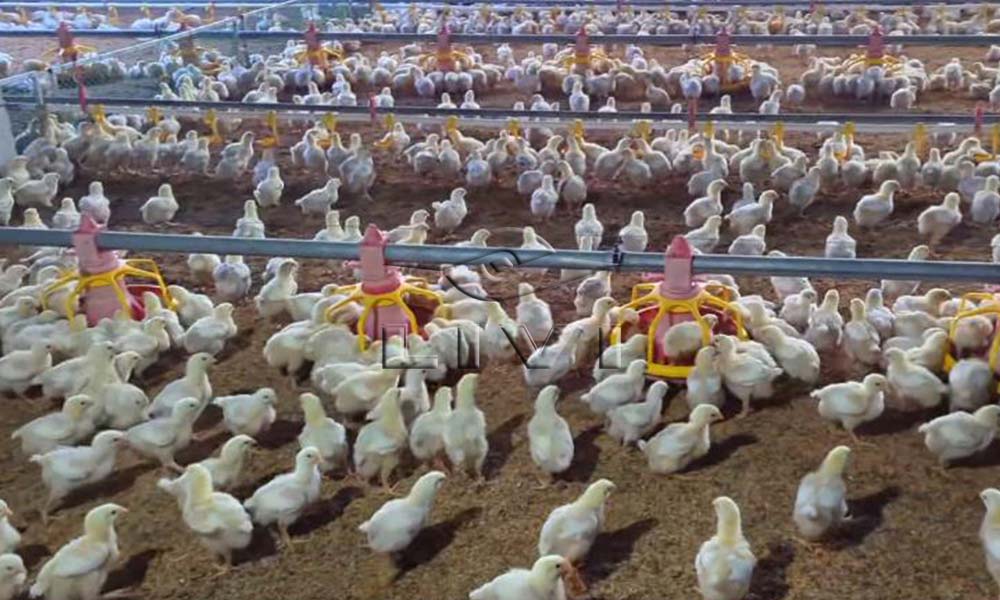
Core Technical Features of Broiler Floor-Rearing Automation Systems
- Adaptive Feeding Mechanisms for Floor Environments
- Auger Design: Corrosion-resistant stainless steel augers (Ø120mm) deliver feed at 15–20kg/minute per line, minimizing spillage on litter floors.
- Height Adjustment: Motorized feeder pans adjust from 10cm (day-old chicks) to 45cm (mature broilers) to prevent feed contamination by litter.
- Data Integration: RFID-tagged feed bins track consumption per zone, enabling real-time adjustments via PLC controllers (±2% accuracy).
- High-Capacity Drinking Solutions
- Nipple Drinker Layout: 1 nipple per 10–12 birds (3,000 nipples total) with 360° activation, ensuring access in densely populated floor spaces.
- Pressure Regulation: 15–25kPa water pressure maintains consistent flow (80–100ml/minute) across 150-meter lines, even with uneven floor slopes.
- Contamination Prevention: Drip cups under each nipple reduce litter moisture by 35% (University of Georgia Poultry Science, 2022).
- System Compatibility with Floor-Rearing Challenges
- Litter Management: Feed lines mounted 30cm above litter minimize dust ingress.
- Ventilation Synergy: Centralized control interfaces link feeding schedules to HVAC systems, reducing ammonia peaks during rest periods.

Performance Metrics: 30,000-Broilers Floor-Rearing Equipment Case Study
- Location: Poultry farm in Nigeria (2023 implementation).
- Baseline: Manual feeding, FCR 1.68, 8% mortality.
- Post-Automation Results:
- Feed Conversion Ratio (FCR): 1.57 (-6.5%)
- Daily Weight Gain: 68g → 73g (+7.3%)
- Labor Costs: Reduced from 0.22/𝑏𝑖𝑟𝑑𝑡𝑜0.22/birdto0.09/bird
Procurement Guidelines: Avoiding Costly Errors
- Critical Design Parameters
- Line Spacing: 2.5–3.0 meters between feed/drink lines to prevent overcrowding.
- Motor Power: 0.75kW motors per 100-meter line for floor-rearing friction resistance.
- Corrosion Resistance: ASTM A554-grade stainless steel for humid litter environments.
- Common Missteps
- Underestimating Litter Impact: Non-enclosed feeders accumulate dust, increasing maintenance by 2 hours/day.
- Ignoring Slope Compensation: Floors with >2% slope require pressure-compensated drinkers.
- Overlooking Training: 92% of system failures stem from incorrect PLC programming by untrained staff.
- Cost-Benefit Analysis
- Capital Cost: 18,000–18,000–22,000 for 30,000-bird system.
- Payback Period: 14–18 months via feed/labor savings.

Implementation Checklist
- Pre-Installation
- Conduct floor flatness tests (tolerance: ±1cm/10m).
- Download our Floor-Rearing Layout Template:
- Post-Installation
- Schedule biweekly nozzle inspections to prevent litter clogs.
- Utilize our Automation Health Dashboard
Take the Next Step
- Request 30000 Broiler Floor-Rearing System Quote:
- Watch Installation Video: Scan QR code below.
- Limited Offer: Free litter moisture sensor with orders placed before [Date].
Optimize Your Floor-Rearing Operation Now →
You might like:
 Layer Cages Price in Nigeria How to Choose the Right System for Maximum Farm Efficiency
 Poultry Cage Price in Kenya for 10,000 Chickens
 Maximize Profits and Comfort for Your Hens with Premium Poultry Cages for Layers
 Why the Price of Chicken Layer Cage is Critical for a 30,000-Bird Farm in Tanzania
- What Is the Best Poultry Farm Equipment for Sale in Nigeria for 10,000 Layers?