20,000 Layer Chicken Farm Solution: Should You Use A Type or H Type Battery Cage System?
For a 20,000 layer chicken farm, the most important question is not only “how much is the chicken cage?” The better question is: which cage system fits your chicken house, budget, labor condition and future egg production plan?
This guide compares two practical solutions for 20,000 laying hens: an A type layer chicken cage solution and an H type layer battery cage solution.
What You Will Know from This Page
- Which chicken cage is suitable for a 20,000 layers project
- Suggested chicken house size for A type cage system
- Suggested chicken house size for H type cage system
- How the cages can be arranged inside the poultry house
- What automatic poultry equipment can be added
- How to choose a more suitable solution for your farm
Quick Answer: For 20,000 Layers, A Type and H Type Cages Are Both Possible, But They Fit Different Farms
If you are building a medium-size egg production farm and want a practical, easy-to-manage and cost-controlled solution, an A type layer chicken cage system is usually a good choice.
If you want higher stocking density, stronger automation, cleaner manure handling and a more intensive commercial poultry farm, an H type layer battery cage system may be more suitable.
The final choice should be based on your chicken house size, local climate, labor cost, investment budget and future expansion plan.
20,000 Layers Farm: A Type Cage Solution vs H Type Cage Solution
The two solutions below are practical planning examples. Final cage quantity and house size should be adjusted according to the exact cage model, bird capacity per set, local building conditions and customer requirements.
| Item | A Type Layer Cage Solution | H Type Layer Cage Solution |
|---|---|---|
| Suitable Buyer | New farmers, medium-size farms, buyers who want easier management and controlled investment. | Commercial farms, expansion projects, buyers who want higher automation and higher space utilization. |
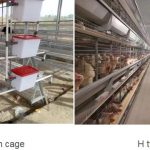
| Recommended Cage | A type 3-tier or 4-tier layer chicken cage, usually with automatic drinking system. | H type 4-tier or 5-tier layer battery cage system, suitable for automatic feeding, manure removal and egg collection. |
| Reference House Size | Usually around 15m width × 70–85m length × 3.5–4m height, depending on cage model and aisle design. | Usually around 12–15m width × 55–75m length × 4–4.5m height, depending on cage tiers and automation level. |
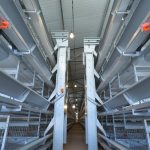
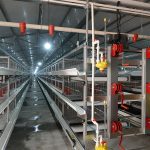
| Cage Arrangement | Usually 3–4 cage rows, with working aisles between rows and side aisles for inspection. | Usually 2–3 cage lines, with compact vertical layout and equipment aisles for maintenance. |
| Automation Level | Manual or semi-automatic feeding, automatic drinking, optional scraper manure removal, manual or semi-auto egg collection. | Automatic feeding, automatic drinking, belt or scraper manure removal, automatic egg collection system. |
| Main Advantage | Lower investment, easy operation, easier ventilation and daily inspection. | Higher density, cleaner house, stronger automation and better for large-scale management. |
| Need to Consider | Requires more floor area than H type and more walking distance for workers. | Requires better ventilation design, installation planning and higher initial investment. |
Solution 1: 20,000 Layers with A Type Layer Chicken Cage System
The A type layer cage solution is suitable for farmers who want a practical and cost-effective way to start or expand an egg production farm.
For a 20,000 layer chicken farm, A type cages are often chosen when the customer has enough land or chicken house length, wants easier daily inspection, and prefers a simpler equipment structure.
First-Time Farm Builders
A type cages are easier for many new poultry farmers to understand, operate and inspect. Workers can check birds, feed and eggs more directly.
Clear Rows and Aisles
The cage rows are separated by aisles, which makes daily management, vaccination, maintenance and cleaning easier.
Controlled Budget
Compared with a highly automatic H type system, A type cage equipment usually requires lower initial investment.
Solution 2: 20,000 Layers with H Type Layer Battery Cage System
The H type layer cage solution is suitable for buyers who want a more intensive, automatic and commercial egg production farm.
For 20,000 layers, H type cages can use vertical space more efficiently. This is useful when land cost is higher, labor cost is rising, or the farmer wants a cleaner and more automatic poultry house.
Commercial Egg Farms
H type cages are more suitable for customers who want professional poultry farm management and higher automation.
Higher Stocking Density
The vertical cage structure makes better use of chicken house height and can reduce the floor area needed for the same bird quantity.
Better for Automatic Equipment
H type cages are more suitable for automatic feeding, manure removal and egg collection, which helps reduce daily labor.
Automatic Poultry Equipment Options for a 20,000 Layer Farm
Whether the customer chooses A type or H type cages, the equipment configuration should match the farm’s labor situation, budget and management level.
| Equipment | A Type Cage Farm | H Type Cage Farm |
|---|---|---|
| Drinking System | Automatic nipple drinking system is recommended as standard. | Automatic nipple drinking system is standard and should match each cage tier. |
| Feeding System | Manual feeding, trolley feeding or semi-automatic feeding can be selected. | Automatic feeding system is recommended for better efficiency. |
| Manure Removal | Scraper manure removal system is a practical option. | Manure belt or automatic manure removal system is recommended. |
| Egg Collection | Manual egg collection or semi-automatic egg collection can be used. | Automatic egg collection system is more suitable. |
| Ventilation | Natural ventilation plus fans can be considered according to local climate. | Fans, air inlets and better ventilation design are more important due to higher density. |
| Lighting | LED lighting can help support stable laying management. | Layered lighting design should match cage tiers and house layout. |
How Should Buyers Choose Between A Type and H Type Chicken Cages?
The right choice is not always the most expensive one. It is the one that fits the customer’s real farm condition.
You Want Easier Operation
A type cages are suitable if you are new to poultry farming, have enough house area, and want a practical solution with lower investment pressure.
You Want Higher Automation
H type cages are suitable if you want to reduce labor, improve space use and build a more intensive commercial layer farm.
Your House Is Already Built
If your chicken house already exists, send the length, width, height and column spacing. The supplier can check which cage layout fits better.
What Information Do We Need to Design Your 20,000 Layers Farm?
To recommend the right battery cage system, we need to understand your project first. This helps us avoid giving a cage plan that looks good on paper but does not fit your real poultry house.
FAQ About 20,000 Layer Chicken Farm Cage Solution
These are the main questions buyers usually need to confirm before requesting a cage layout and quotation.
Is A type cage enough for a 20,000 layer chicken farm?
Yes. A type layer cages can be used for a 20,000 layers project, especially when the customer wants a practical and cost-controlled solution. It is suitable for new farms and medium-scale egg production projects.
When should I choose H type layer cages?
H type layer cages are more suitable when the customer wants higher stocking density, stronger automation, better manure removal and a more commercial farm layout.
What chicken house size is needed for 20,000 layers?
The size depends on cage type and layout. As a reference, an A type cage solution may need around 15m × 70–85m, while an H type cage solution may need around 12–15m × 55–75m. The final design should be calculated according to the exact cage model.
Can I use semi-automatic equipment for 20,000 layers?
Yes. For many 20,000 layer farms, semi-automatic feeding with automatic drinking and scraper manure removal can be a balanced solution between investment and labor saving.
What should I send to get a quotation?
Please send your country, chicken quantity, chicken house size, project stage, preferred cage type and required automation level. If you are not sure which cage type to choose, we can recommend a solution based on your farm condition.
Need a 20,000 Layers Cage Layout for Your Chicken House?
Send us your chicken house size and project plan. We can help you compare A type and H type layer cage solutions, recommend suitable poultry equipment and prepare a practical layout for your farm.
If your house is already built, please share the length, width, height and column spacing. If you are still designing the house, we can help you plan the cage arrangement before construction.