

10,000-Layer Farm Planning Guide for Nigeria
What Equipment Do I Need to Start a 10,000-Layer Farm in Nigeria?
To start a 10,000-layer farm in Nigeria, a practical equipment package includes A-type layer cages, automatic nipple drinking, feeding equipment, manure removal, ventilation fans, lighting, water storage, electrical control and backup power. For this farm size, Livi Machinery recommends the 4-tier 5-door A-type layer cage as a practical starting configuration.
Using a cage capacity of 160 birds per set, a 10,000-layer project requires approximately 63 cage sets. A regular three-row layout with 21 sets per row provides 10,080 bird positions, which is easier to design and operate than forcing the installed capacity to exactly 10,000 birds.
Around 10,000 layers
4-tier 5-door A-type
3 rows × 21 sets
About 10,080 layers
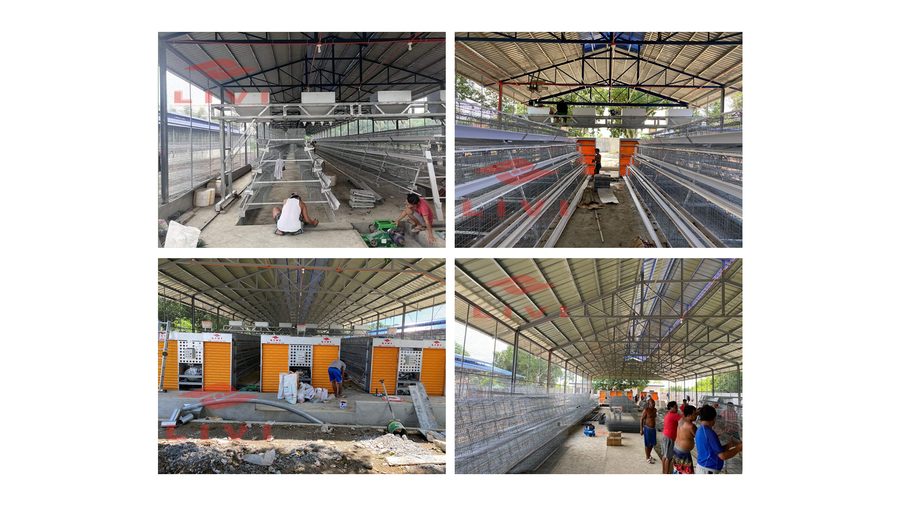
What Equipment Does a 10,000-Layer Farm in Nigeria Need?
A 10,000-layer farm should be planned as a complete production system. Cage equipment alone is not enough. The project also needs drinking, feeding, manure removal, ventilation, lighting, water storage, electrical distribution, egg handling and backup power.
In Nigeria, equipment planning should also consider high ambient temperatures in many production areas and the possibility of unstable power supply. Ventilation and water supply should therefore be treated as core farm systems rather than optional accessories.
| Equipment | Recommended Configuration | Priority |
|---|---|---|
| Layer cages | 4-tier 5-door A-type | Essential |
| Drinking system | Automatic nipple drinking | Essential |
| Feeding | Manual-assisted or automatic | Recommended |
| Manure removal | Scraper or mechanized cleaning | Recommended |
| Ventilation | Fans + natural airflow / cooling as needed | Essential in hot conditions |
| Water storage | Tank + filter + pressure control | Essential |
| Backup power | Generator or other backup source | Strongly recommended for mechanized farms |
How Many Layer Cage Sets Are Needed for 10,000 Chickens?
The Livi 4-tier 5-door A-type layer cage measures approximately 1950 mm × 450 mm × 410 mm and accommodates 160 birds per set.
Because half a cage set cannot be installed, the project needs at least 63 sets. A particularly practical arrangement is:
This produces three equal cage rows, making the poultry house easier to design and simplifying feeding, drinking, manure cleaning and daily management.
Buyers planning a 10,000 layer cage system in Nigeria should use the actual installed cage capacity when preparing the final farm layout and quotation.
What Poultry House Design Is Suitable for a 10,000-Layer Farm?
Poultry house dimensions should be calculated from the cage layout rather than selected from bird capacity alone. With three rows of 21 A-type cage sets, each cage line is approximately:
After adding front and rear working areas, entrances, feeding space and maintenance clearance, a preliminary poultry house length of around 48–52 m is practical. A preliminary width of approximately 10–12 m can accommodate three A-type cage rows and operating aisles.
| Design Item | Preliminary Value |
|---|---|
| Number of houses | 1 poultry house |
| Cage rows | 3 rows |
| Sets per row | 21 sets |
| Cage line length | About 40.95 m |
| Preliminary house length | About 48–52 m |
| Preliminary house width | About 10–12 m |
Final dimensions should be adjusted for local construction conditions, aisle width, columns, manure cleaning equipment, ventilation and future expansion.

What Feeding and Drinking Equipment Should Be Used?
Automatic nipple drinking should be included from the beginning. The system should include nipple drinkers, water pipes, filters, pressure regulators and a reliable storage tank.
Feeding can remain manual-assisted if the project budget is controlled, but automatic feeding becomes attractive when the owner wants to reduce repetitive labor or plans to expand beyond the initial 10,000-layer capacity.
| System | Basic Configuration | Upgrade Option |
|---|---|---|
| Water | Tank + filter + nipple lines | Dosing and water monitoring |
| Feed | Manual-assisted distribution | Silo + conveyor + automatic feeding machine |
What Manure Removal System Is Suitable for 10,000 Layers?
Manure handling should be mechanized where possible because 10,000 layers generate enough daily manure to create a significant cleaning workload. For an A-type cage project, a scraper-based manure removal system is a practical option.
The manure discharge direction should be decided during poultry house planning. Manure routes should remain separate from feed storage and clean egg handling areas.
Mechanized removal reduces repetitive labor inside the poultry house.
Regular manure removal helps limit moisture and ammonia accumulation.
The discharge point should be defined before construction.
Is Automatic Egg Collection Necessary for 10,000 Layers?
Automatic egg collection is not mandatory at this capacity. A 10,000-layer farm can still use manual egg collection if labor is available and the cage rows provide convenient access.
However, the poultry house should reserve enough space for future automation. If the farm later expands, the Livi Automatic Egg Collection System can reduce repeated walking and manual handling.
| Method | Initial Investment | Labor | Suitable Situation |
|---|---|---|---|
| Manual egg collection | Lower | Higher | Starter farm with available labor |
| Automatic egg collection | Higher | Lower repetitive work | Expansion-focused or labor-saving farm |
How Should Ventilation Be Designed for a Layer Farm in Nigeria?
Ventilation is especially important for a layer farm in Nigeria because high temperatures can reduce bird comfort and increase the need for air movement. The poultry house should be designed to remove heat, humidity, dust and manure gases while supplying fresh air evenly along all cage rows.
A 10,000-layer A-type house can use natural airflow combined with mechanical fans, depending on the exact location and house design. In hotter conditions, additional cooling may be required.
The Livi Ventilation Design Standard should be based on actual house dimensions, bird capacity, local temperature and humidity rather than using a fixed number of fans for every 10,000-bird project.
| Ventilation Item | Design Purpose |
|---|---|
| Side openings / air inlets | Bring fresh air into the house |
| Exhaust or circulation fans | Increase airflow and remove heat |
| Cooling system | Support temperature control when climatic conditions require it |
| Temperature monitoring | Detect heat stress risk early |
What Power and Water Infrastructure Does the Farm Need?
Water and electricity should be planned before cages arrive. A layer farm needs continuous water every day, while fans, pumps, feeding machines and other automatic equipment depend on reliable electricity.
For a Nigerian commercial poultry project, a backup generator or another reliable backup power source is a practical part of the equipment plan when ventilation and feeding depend on electric motors.
Water Storage
Provide reserve water so drinking lines are not interrupted by temporary supply problems.
Water Treatment
Use filtration and pressure regulation before water reaches nipple lines.
Main Power
Confirm voltage and frequency before equipment production.
Backup Power
Provide backup for fans, pumps and automatic equipment.
What Information Is Needed for a 10,000-Layer Farm Quote in Nigeria?
A quotation should not be based only on the phrase “10,000 layers.” The final price depends on cage layout, house dimensions, automation level, ventilation, electrical specifications and delivery location.
Farm Capacity
Target bird number and future expansion plan.
Land & House
Land dimensions, existing house size or proposed new building.
Automation
Feeding, manure removal and egg collection requirements.
Local Conditions
Project city, climate, voltage, water source and delivery destination.
With this information, Livi Machinery can prepare a customized 10,000 layer poultry farm design in Nigeria instead of providing only a cage-unit price.
FAQ About Starting a 10,000-Layer Farm in Nigeria
How many layer cages are needed for 10,000 chickens?
Using a 4-tier A-type layer cage with 160 birds per set, the mathematical requirement is 62.5 sets. A practical project uses 63 cage sets. Arranging three equal rows with 21 sets each provides 10,080 bird positions and creates a regular layout for feeding, drinking, manure removal and worker access.
What size poultry house is needed for 10,000 layers?
For three rows of 21 A-type cage sets, the cage line is approximately 40.95 m long. After adding equipment and service areas, a preliminary house length of about 48–52 m and width of about 10–12 m can be used for planning. Final dimensions should be confirmed from the actual site and ventilation design.
Does a 10,000-layer farm need fully automatic equipment?
Not necessarily. Automatic nipple drinking should be included, but feeding, manure removal and egg collection can be selected according to budget and labor availability. If the farm is expected to expand, the initial house layout should reserve the space and electrical capacity needed for future automation.
Is backup power important for a poultry farm in Nigeria?
Backup power becomes increasingly important when the farm depends on electric fans, water pumps, automatic feeding or other motor-driven equipment. Power planning should therefore be completed before selecting the final automation level so essential systems can continue operating during an interruption.
What should I prepare before asking for a poultry equipment quotation?
Prepare the target capacity, land dimensions, poultry house dimensions if already built, project location in Nigeria, automation requirements, available voltage, water source, manure handling method, egg collection preference and future expansion plan. These details allow the supplier to calculate an actual cage layout and complete equipment configuration.
Planning a 10,000-Layer Farm in Nigeria?
Livi Machinery can prepare the cage quantity calculation, poultry house layout, feeding and drinking configuration, manure removal system, ventilation plan, water and power requirements, optional egg collection system and installation guidance according to your land size, project location and investment plan.
Layer farm equipment configuration in NigeriaYou might like:
 Delivering 168 sets layer chicken cage for 20160pcs birds to Nigeria
 In-depth analysis of the advantages and disadvantages of the three types of broiler farming
 Hot poulrty farm layer hen cage for sale in Zambia
 South Africa Egg Layer Cages for 10,000 Chickens
 Automatic Broiler Floor-Rearing Feeding & Drinking Line System for 30,000 Broilers